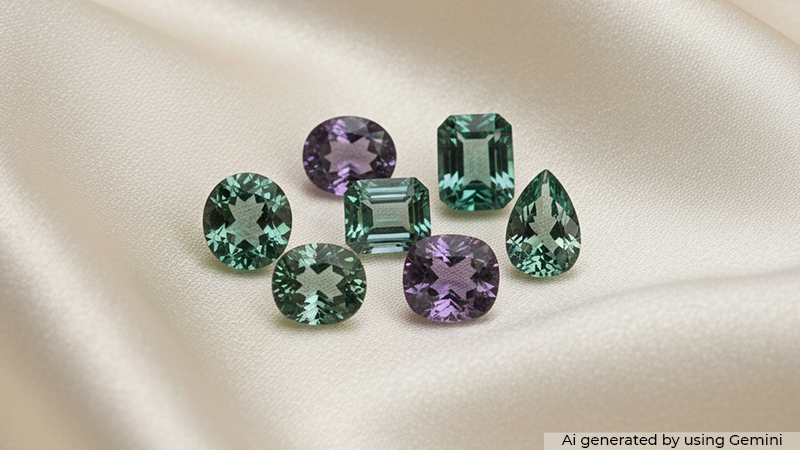
The wonder of nature never ceases to amaze, and when it comes to color‑changing gems, the alexandrite gemstones reveal breathtaking magic. The bluish‑green hue in daylight and purplish‑red glow in incandescent light are truly a magnificent feature of this stone.
This dramatic color shift is what sets alexandrite apart from other gemstones. Despite this proof of shade‑changing brilliance, buyers sometimes make mistakes when identifying genuine alexandrite. Why? Because the flaws aren’t always visible, and most of us aren’t gemologists. Still, we’d like to guide you through the nooks and crannies of how to buy an authentic alexandrite gemstone. This may not make you an expert, but it will help you choose the right gem. Let’s begin.
The Geological Heritage of Alexandrite
The gem was first discovered in 1834 in emerald mines near the Tokovaya River in the Ural Mountains.
You might have heard about alexandrite being named after Czar Alexander II of Russia. But did you know the hue of this gem mirrors the national military colors of Imperial Russia? Fascinating, isn’t it?
When Russia’s mines ran dry, deposits were discovered in Brazil in 1987. Following the Brazilian discovery, additional mines were found in East Africa and Sri Lanka, expanding its availability beyond Russian territory.
It’s a Rare Gemstone
When something is grand, it stays grand even in its smallest form, and that’s exactly what the alexandrite gemstone proves. Small, lower‑quality natural alexandrite is rarer than diamonds, and they’re costly. When buying alexandrite rings, it’s important to understand that the value of each piece is based on the stone’s extent of color change. Gemstones exhibiting a full green‑to‑purple‑red shift are extremely rare and valuable.
Premium‑quality natural alexandrite is almost unaffordable, underscoring its rarity and high demand, especially in alexandrite jewelry.
The Wonder of Alexandrite’s Color Change
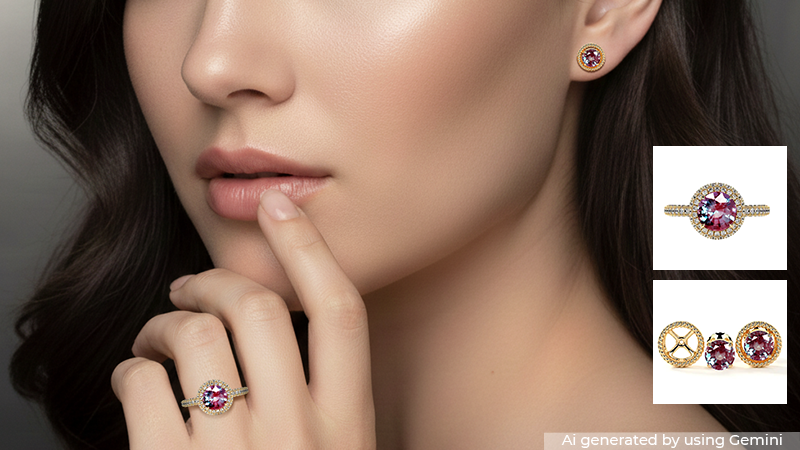
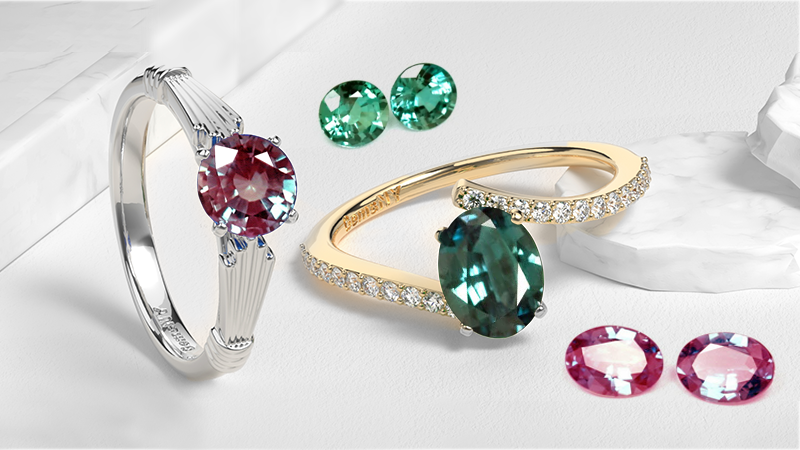
The wondrous color‑changing ability of alexandrite comes from the mineral chrysoberyl. The gemstone displays varying hues under different lighting conditions, bluish‑green in daylight and brownish or purplish‑red in candle flame.
Under ultraviolet light, natural alexandrite reveals phosphorescence and fluorescence, serving as additional identification markers. In fluorescent light, the color change becomes more pronounced, adding to the allure of the stone.
Ever heard of the term “alexandrite effect”? If not, you should know it describes the remarkable shift of the stone’s hue. This applies mainly to natural gems. Lab alexandrite shows less vibrant color change than mined stones, since laboratories struggle to replicate natural geological conditions during creation.
Natural Inclusions in Alexandrite Gemstone
Want to buy a white gold alexandrite engagement ring? You should know about the natural inclusions first. This is mainly because if you propose to your partner with a ring with visible blemishes, she might hesitate to answer immediately. Thus, it’s better to understand nature’s fingerprints on alexandrite gemstones beforehand.
The natural inclusions in alexandrite are a significant marker for differentiating genuine stones from lab‑created ones. These inclusions may include fluorite, apatite, rutile, mica platelets, negative crystals, fingerprints, and liquid inclusions.
Additionally, lab alexandrite is a type of synthetic corundum, and it may contain distinctive gas bubbles that are absent in natural gems.
Natural alexandrite, formed under harsh geological conditions, contains inclusions that mark its originality. However, lab-made stones can mimic the blemishes of natural gems. This is why professional inspection by gemologists is important to identify a genuine alexandrite.
Identifying Lab-Made and Simulated Alexandrite Gemstone
When you want to buy alexandrite, you’ll find various options. But if you prefer the natural ones, things can get tricky.
There are two types of gemstones available in the market: lab‑made and simulated. The lab‑created ones are almost identical to their natural counterparts, both physically and chemically. They are also more affordable.
On the contrary, simulated alexandrite merely mimics the appearance of real alexandrite. It doesn’t share the physical or chemical properties of the gem.
Distinguishing between natural and lab‑grown alexandrite can be challenging. Lab‑grown versions may display more vibrant color changes and lack natural inclusions.
Simulants, meanwhile, often contain different densities and refractive indices.
Want to learn more about nature’s chameleon, the alexandrite gemstone? Check out this complete guide on the June birthstone, alexandrite.
What are the Testing Methods for Alexandrite?
Before you explore the alexandrite earrings for sale collection at a store, let’s learn how gemologists identify genuine alexandrite.
Refractive Index Measurement: Experts often use a refractometer to measure how light bends as it passes through the alexandrite gemstone. Genuine stones have a refractive index between 1.741 and 1.760.
UV Fluorescence: When exposed to ultraviolet light, natural gems may display red fluorescence, though this depends on the stone’s origin.
Spectroscope Analysis: This tool detects absorption lines unique to alexandrite, helping differentiate the gem from other stones.
These tests provide helpful insights, but they are mostly performed by professionals using specialized tools.
I know these methods are beyond your reach, but hey, you don’t have to worry about the authenticity of an alexandrite stone. Jewelers like GemsNY offer genuine stones with authentic certificates. All you need to do is look for a sale and dive in to grab the best pieces.
Seek Professional Help
The complexities of identifying genuine alexandrite are real. This is why consulting a certified gemologist is highly important.
Want to know where to buy an alexandrite engagement ring? Look for reputed jewelers like GemsNY, who offer detailed reports and certification on alexandrite jewelry.
At GemsNY, you can also rely on their expert gemologists to craft a unique piece using the Make Your Own feature.
Tips for Purchasing Alexandrite Gemstone Jewelry
Now you know how to identify a genuine alexandrite, it’s time to understand some buying rules. Here are the tips. Let’s dive in.
Research Jewelers: Look for reputable jewelers to secure better deals.
Be Cautious of Lower Prices: Alexandrite is a rare and valuable gemstone, so it will not be sold cheaply. Keep this in mind whenever you see a shop offering surprisingly low prices.
Request Certification: Always ask for certificates of authenticity when purchasing alexandrite jewelry.
Check Shipping and Return Policies: Ensure the seller ships to your location and provides a clear return policy.
Parting Thoughts
Identifying a genuine alexandrite requires a clear understanding of its mesmerizing color‑change phenomenon. Only through careful examination of its inclusions and precise measurement of its physical properties can one determine the real gem.
It’s also necessary to purchase from a reputable jeweler to ensure authenticity. The allure of alexandrite lies not only in its magical color change but also in its rarity and its mysterious origin.
So, while you’re still searching, consider choosing GemsNY as your alexandrite gemstone destination. Shop real stones, and after purchasing, don’t forget to leave your feedback in GemsNY Reviews to inspire others.
Recommend0 recommendationsPublished in Jewelry