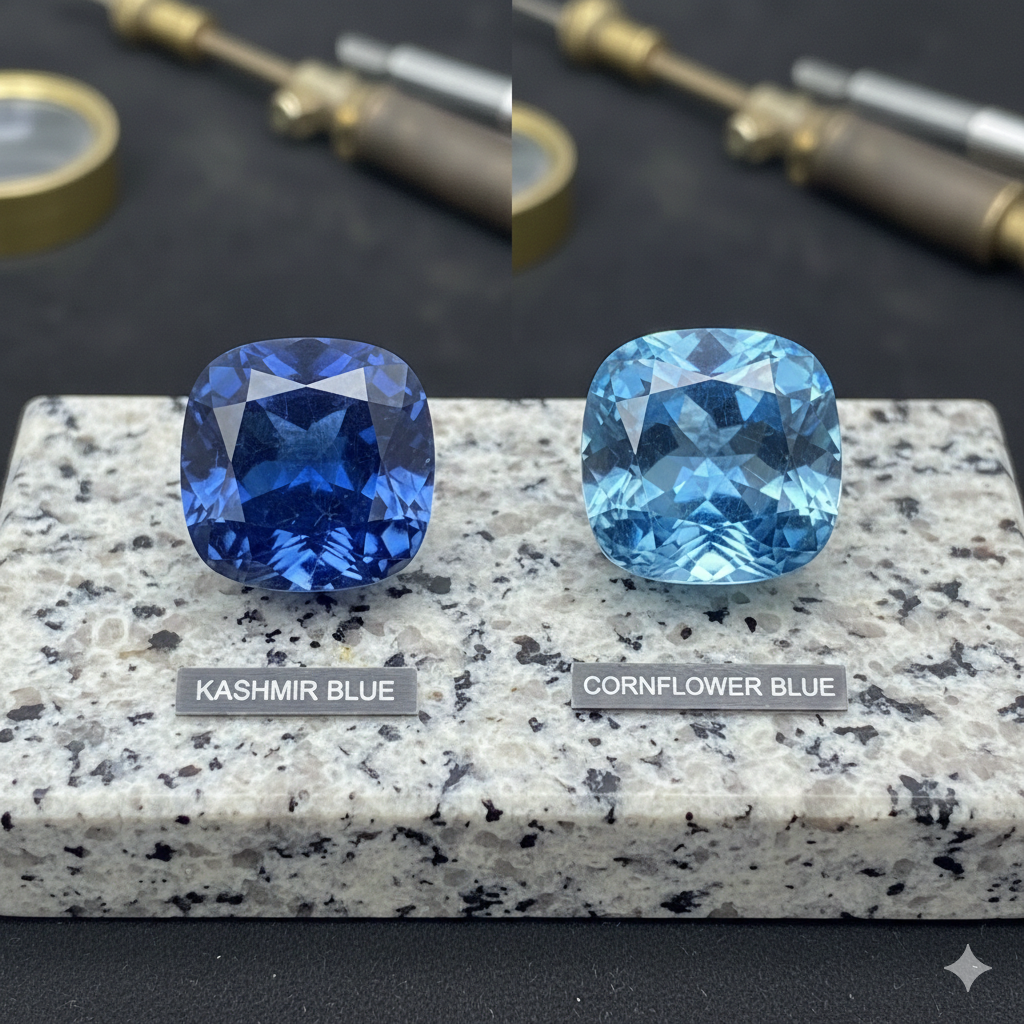
Premium quality Blue Sapphire – when a person thinks of a precious gemstone, a particular stone that comes to their mind is the blue sapphire for its appearance, durability, and astrological importance. Of all the types of Blue Sapphires, Kashmir Blue Sapphire and Cornflower Blue Sapphire are indeed the most sought after. Despite the superficial resemblance, there is a major difference between them. These differences provide buyers the ability to select their perfect Blue Sapphire Ring for beauty, value, or investment.
What Is a Kashmir Blue Sapphire?
Kashmir Blue Sapphire is one of the rarest and most costly gemstones available in the world. These sapphires were first discovered in the Kashmir region of India in the late 19th century. Today, the mines are virtually depleted, which endows these stones with a particular rarity.
The characteristic trait of Kashmir Blue Sapphire is the velvety royal blue hue. The stone looks soft, rich, and uniformly colored – referred to as “sleepy” or even “milky.” Due to their rarity and beauty, Kashmir sapphires are often sought after by collectors and used in expensive Blue Sapphire Ring.
What is a Cornflower Blue Sapphire?
Cornflower Blue Sapphire is simply a colour description and not a location. This colour is somewhat the soft blue of the cornflower petals. These are generally found in Sri Lanka (Ceylon), Madagascar, and Myanmar.
Cornflower Blue Sapphire is valued for its vibrant, luscious blue colour and good transparency. Cornflower sapphires appear to be more brilliant and translucent, unlike the velvety look of Kashmir stones. They are relatively affordable when compared to Kashmir sapphires and are a favorite among gemstone enthusiasts as well as those who desire the influence of said planets.
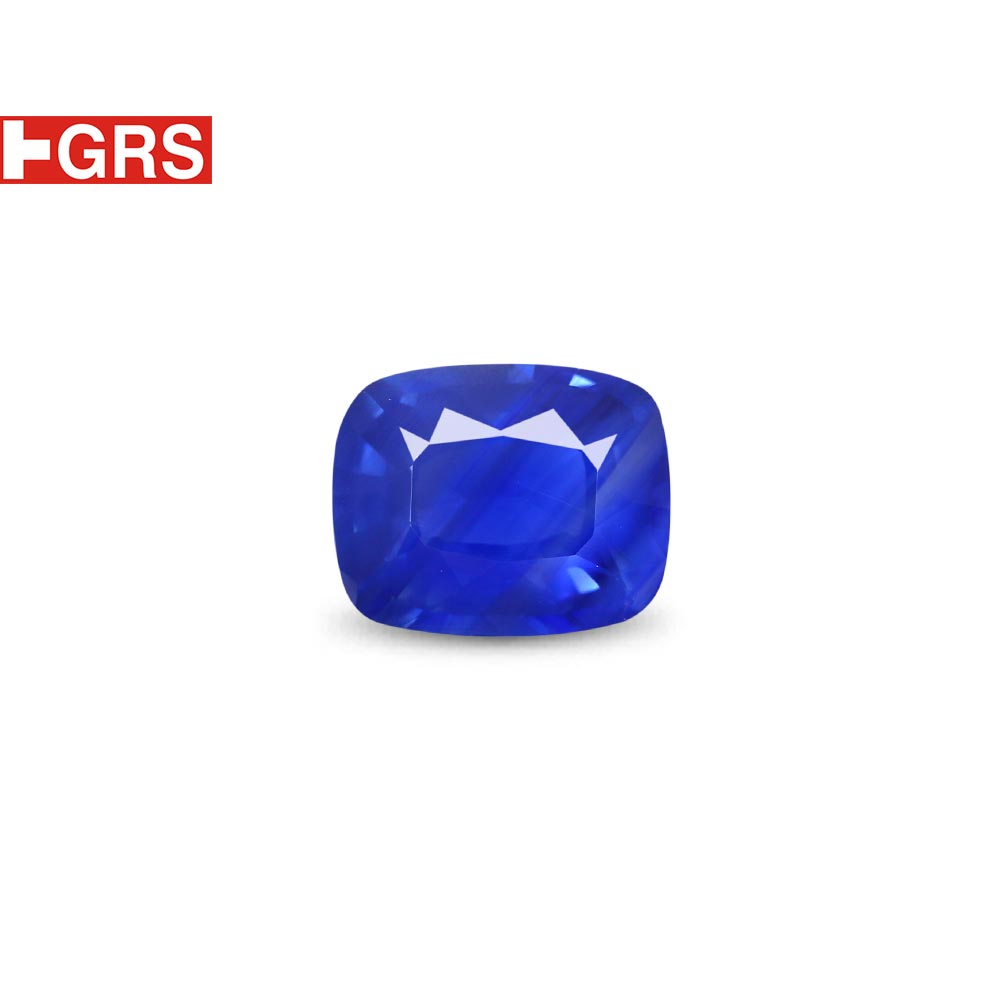
Image Resource: Navratan Gemstone
Variations Other Than Size Between Kashmir and Cornflower Blue Sapphire
Color Appearance
Kashmir Blue Sapphire: Deep royal blue with a velvety, soft texture
Cornflower Blue Sapphire: light to medium color blue except in rare birds-eye clarity selections, where bright and clean is used as a qualifier.
Rarity
Because the mines are closed, gems from Kashmir are exceptionally scarce.
Cornflower Blue Sapphire is scarce, yet might be seen in the market
Price
The Kashmir Blue Sapphire is many orders of magnitude more expensive
This cornflower blue sapphire is of top quality at a lower price.
Transparency
Kashmir sapphires are typically silky or slightly cloudy
Cornflower sapphires tend to be more translucent and transparent
Which Blue Sapphire Is Better for a Blue Sapphire Ring?
If budget is not an issue and you want exclusivity, there’s nothing like Kashmir Blue Sapphire. However, for everyday wear, beauty, and value, Cornflower Blue Sapphire is a great option. Both stones are just as acceptable for astrological purposes if they are natural and certified.
FAQs
1. Kashmir Blue Sapphire or Cornflower Blue Sapphire?
Ans. Kashmir Blue Sapphire is rarer and also expensive, but cornflower blue looks stunning and fantastic value.
2. Can Cornflower Blue Sapphire be worn for astrological purposes?
Ans. Yes, an original and untreated Cornflower Blue Sapphire is good for astrology.
3. What makes Kashmir Blue Sapphire so costly?
Ans. Its value is astronomical because they are one of the rarest gemstones in the world, 95% of all production mines have been closed, and it is sensationally unique, velvety blue.
4. Which Blue Sapphire Ring is good to wear regularly?
Ans. Availability and durability, Cornflower Blue Sapphire is what I am more practical for everyday wear.
Recommend0 recommendationsPublished in Uncategorized