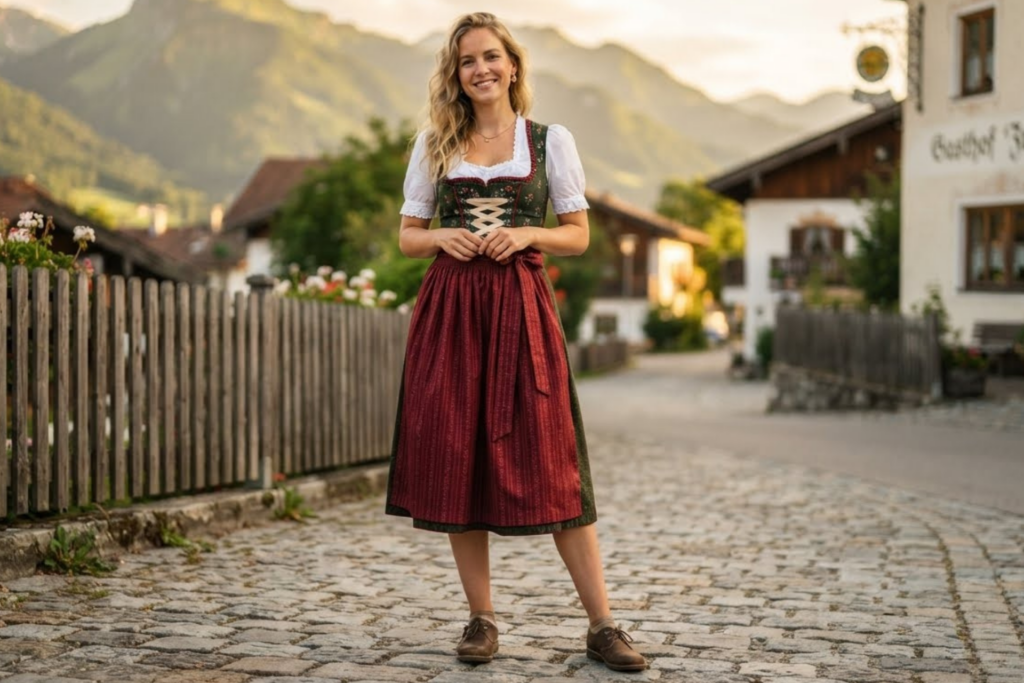
Behind every stitched flower and geometric border on a traditional dress lies a pattern language developed over generations. Embroidered Bavarian dirndls carries far more detail than most people notice at first, with specific motifs, colors, and layouts that reflect deep regional tradition rather than random decorative choices made purely for visual appeal.
At elederhosen, we study these traditional patterns closely, ensuring our embroidery stays rooted in authentic Bavarian design rather than generic costume styling. This article breaks down how to read and understand the patterns commonly found on embroidered Bavarian dirndls, so you can appreciate the craftsmanship behind each design.
Why Pattern Recognition Matters
Learning to recognize traditional embroidery patterns changes how a dirndl is understood and appreciated. What might look like simple decoration to an untrained eye often carries specific regional or symbolic meaning, connecting the wearer to a much longer history of Bavarian craftsmanship and community identity.
This knowledge also helps when shopping for an authentic dirndl, since genuine traditional patterns tend to differ noticeably from generic, mass-produced costume prints. Understanding what to look for makes it easier to identify pieces built with real cultural respect and craftsmanship, rather than designs that merely borrow the general aesthetic without the underlying meaning.
Common Pattern Types in Bavarian Embroidery
Several distinct pattern styles appear repeatedly across traditional Bavarian dirndl embroidery.
How Color Choices Affect Pattern Meaning
Color plays just as important a role as the pattern itself in traditional Bavarian embroidery.
- • Red and gold combinations often signal festive or celebratory versions of the dress.
- • Deep greens and browns tend to reflect more traditional, everyday embroidery styles.
- • Blue accents are frequently associated with specific Alpine regions known for gentian flowers.
- • Muted, earthy palettes generally indicate older or more historically accurate pattern styles.
Reading Pattern Placement and Density
Where a pattern appears, and how densely it’s applied, can also carry meaning.
- • Dense, elaborate bodice embroidery often signals a more formal or festive dirndl.
- • Simpler, more spaced-out patterns are typically associated with everyday or working versions of the dress.
- • Matching patterns between the bodice and apron reflect careful, intentional design.
- • Border-only embroidery, without a dense central design, often suggests a more modern or minimalist interpretation.
Regional Differences in Pattern Style
Beyond individual motifs, entire regions within Bavaria developed distinct approaches to embroidery composition.
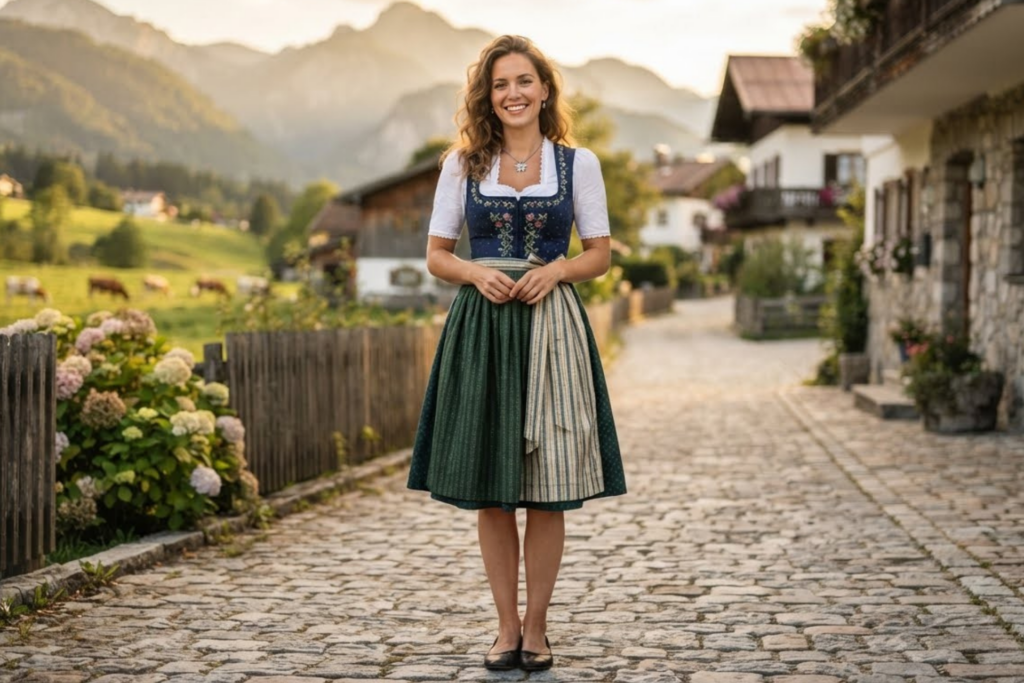
- • Some regions favor tightly clustered floral arrangements across the entire bodice.
- • Others use more open, spaced-out designs with a single focal motif.
- • Certain communities incorporate family or village-specific symbols alongside standard floral patterns.
- • Border complexity often varies by region, ranging from simple lines to intricate repeating designs.
How Traditional Patterns Continue to Evolve
While traditional motifs remain central to Bavarian dirndl embroidery, modern designers continue to reinterpret these patterns for contemporary tastes. Color palettes may shift, and pattern scale can be adjusted, but the underlying visual language often stays recognizable to anyone familiar with the tradition and its historical roots in Alpine village life.
This blend of respect for history and openness to reinterpretation is part of why embroidered Bavarian dirndls remain relevant today. The patterns continue to tell a story, even as the specific execution evolves to suit modern fabrics, silhouettes, and personal style preferences that reflect the wearer’s own taste alongside inherited tradition.
Frequently Asked Questions
What are the most common embroidery patterns found on Bavarian dirndls?
Floral clusters, geometric borders, and vine or leaf patterns are among the most common, often combined into a cohesive overall design.
Does the color of embroidery on a dirndl carry specific meaning?
Yes, certain color combinations, like red and gold, traditionally signal more festive versions, while muted earthy tones often reflect everyday styles.
How can I tell if an embroidered dirndl pattern is authentic?
Authentic patterns tend to follow traditional motifs, placement, and color combinations rather than generic, mass-produced costume prints.
Does embroidery density indicate the formality of a dirndl?
Yes, denser, more elaborate embroidery generally signals a formal or festive dress, while simpler patterns suggest everyday wear.
Can modern embroidered Bavarian dirndls still reflect traditional patterns?
Yes, many modern designs reinterpret traditional motifs and color palettes while updating fabric and fit for contemporary wear.
Do embroidery patterns ever combine motifs from multiple regions?
Yes, some modern and even historical dirndls blend regional influences, especially in areas near traditional borders where craftsmanship traditions overlapped.
Final Thoughts
Understanding the patterns found on an embroidered Bavarian dirndl reveals a layer of meaning that goes far beyond simple decoration. From floral motifs to color choices, placement, and regional variation, each design element reflects generations of tradition and craftsmanship passed down through Alpine communities. At elederhosen, we remain committed to honoring these traditional patterns, so every dirndl we create carries authentic Bavarian heritage forward into modern wardrobes.
Recommend0 recommendationsPublished in Uncategorized