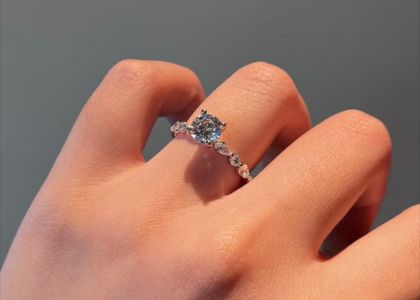
Buying an engagement ring is a big purchase, so it helps to set a clear budget first. You do not need to follow the old three-month salary rule. Your income and wedding plans should guide your choice. Diamond type, cut, color, clarity, carat weight, metal, and setting can all change the price. Current buying habits also give you more choice. The Knot’s 2026 Real Weddings Study found that lab-grown center stones made up 61% of engagement ring purchases, while the average spend was $4,600. Delaware also has no state or local sales tax, which can help when you compare the final price of a ring.
In this article, we will discuss how to choose an engagement ring in Delaware based on your budget, compare diamond choices, understand the 4Cs, and check the details before you buy.
How Much Should You Spend On An Engagement Ring?
There is no set amount that you must spend on an engagement ring. Your budget should fit your own finances.
The three-month salary rule is not a financial requirement. It was used in diamond marketing and does not consider your personal needs.
Your monthly income
Your savings
Your current debt
Your emergency fund
Your wedding budget
Other large expenses
Set a maximum amount that you can pay without putting stress on your finances. Then stay within that amount. Do not use the largest financing amount a store offers as your budget. A monthly payment may look small. But the total cost can be much higher.
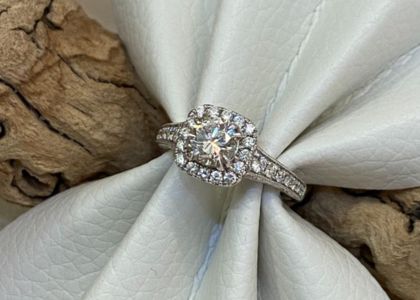
How Much Does An Engagement Ring Cost In Delaware?
There is no single price for an engagement ring. The cost can change a lot based on the diamond and brand.
The Knot’s 2026 study reported an average U.S. engagement ring spend of $4,600. It also found a clear shift toward lab-grown center stones. Lab-grown rings had an average spend of $4,300 in the study, compared with $7,000 for rings with natural center stones.
These figures are useful for reference. They should not decide your budget.
Delaware has no state or local sales tax. The state does charge a gross receipts tax to sellers. But this is a business tax. It is not a sales tax added to the customer’s purchase.
That means you should still compare the full price of the ring. Check the stone and any other charges.
What Are The 4cs Of A Diamond?
The 4Cs are cut, color, clarity, and carat weight. GIA uses these four factors to describe diamond quality. Understanding them can help you compare rings with less confusion.
Cut
Cut affects how a diamond reflects light. It can affect brightness and sparkle. GIA says cut is different from shape. Round, oval, pear, and marquise are shapes. Cut refers to how the diamond is made and how its facets work.
For a limited budget, do not focus on carat weight alone. A well-cut diamond can give you a good look without paying for the largest stone.
Color
GIA grades standard diamonds from D to Z. D is at the colorless end of the scale. More color appears as you move toward Z. You may not need the highest color grade. Compare stones in person when possible. The setting and metal can also affect how the stone looks.
Clarity
Clarity refers to inclusions inside a diamond and blemishes on its surface. Higher grades usually cost more. You may not need a very high clarity grade if small marks cannot be seen without magnification. Look at the actual stone instead of paying for a grade alone.
Carat weight
Carat weight measures how much a diamond weighs. It does not mean visual size. Two diamonds with the same carat weight can look different. Their shape and cut can affect how large they appear.
Should You Choose A Natural Or Lab-Grown Diamond?
Your choice of diamond type can make a large difference to your budget.
A natural diamond forms in the earth. A lab-grown diamond is made in a laboratory. A lab-grown diamond has the same basic chemical composition and crystal structure as a natural diamond. The FTC requires sellers to clearly state when a diamond is laboratory-grown or laboratory-created rather than mined.
The 2026 Real Weddings Study found that 61% of engagement ring purchases had lab-grown center stones. It also reported an average spend of $4,300 for lab-grown center-stone rings and $7,000 for natural-stone rings.
So, when you buy engagement ring options, compare the two types at the same budget. A lab-grown stone may give you room to choose a larger carat weight or a different setting.
There is no need to choose one type simply because it is more popular. Consider your budget and what matters to you.
Which Ring Setting Should You Choose?
The setting holds the center stone. It also affects the total price and the way the ring looks.
Common settings include:
Solitaire
Halo
Three-stone
Pavé
Bezel
Cathedral
A solitaire has a simple design and can help keep the cost focused on the center stone. A setting with several smaller diamonds can cost more because it uses more stones and metal.
Think about your partner’s daily routine too. A lower setting may be easier for someone who works with their hands. A higher setting can give a larger stone a more open look but may catch on clothing.
Which Metal Is Best For Your Budget?
Gold and platinum are common choices for engagement rings. Gold can come in yellow, white, and rose tones. Platinum has a different look and is naturally white.
The metal can affect the final price. It can also affect care and durability.
When comparing rings, ask:
What metal is used?
What is the metal purity?
Is the ring plated?
How should it be cleaned?
Can it be resized?
What care does the seller recommend?
Do not choose the metal based on price alone. Think about how the ring will be worn each day.
What Steps Should You Follow Before You Buy?
A simple process can help you stay on budget and compare rings fairly.
Step 1: Set your maximum price
Choose the highest amount you are comfortable spending. Keep this number firm.
Step 2: Pick your top priorities
Choose two or three features that matter most. These could be:
Diamond size
Cut
Shape
Metal
Setting
Diamond type
You do not need the highest grade in every category.
Step 3: Compare diamond types
Look at natural and lab-grown diamonds with similar shapes and grades. Compare the total ring price.
Step 4: Check the grading report
Ask for a diamond grading report when one is available. GIA reports can include the diamond’s shape, color, clarity, carat weight, cut grade for standard round brilliant diamonds, proportions, and other details.
Check the report number against the grading laboratory’s records before you pay.
Step 5: Ask what the price includes
Ask about:
Ring setting
Resizing
Warranty
Cleaning
Repairs
Appraisal
Insurance documents
Return policy
Get important terms in writing.
Step 6: Compare the complete ring
Do not compare two rings by carat weight alone. Look at the diamond, setting, metal, report, services, and total price together.
What Should You Check Before Buying An Engagement Ring In Delaware?
Before you pay, read the return and exchange policy. Ask how long resizing takes. Some ring designs may have limits on resizing.
Ask how the ring should be cleaned and checked. Prongs and other parts can wear over time.
Keep your receipt and diamond report. Also keep your appraisal, warranty, and other purchase documents. These records can help if you later need repairs, an appraisal, or insurance.
When comparing local options, Whitten’s Fine Jewelry can be included in your research. Still, compare the actual ring details and purchase terms rather than relying on the store name alone.
How Can You Get More From Your Ring Budget?
You can make several small changes to control the price.
Compare several diamond shapes.
Consider a slightly lower carat weight.
Look at near-colorless diamonds.
Compare eye-clean clarity options.
Consider lab-grown diamonds.
Choose a simpler setting.
Compare gold and platinum.
Ask for the full price before making a decision.
GIA notes that carat weight is only one part of the 4Cs. A higher carat weight does not automatically mean a better diamond.
For many buyers, the best approach is to decide which features they care about most. Then spend more in those areas and save on features that matter less.
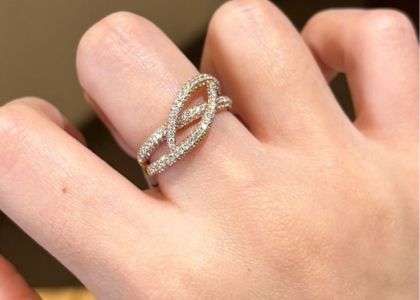
What Is The Best Way To Buy An Engagement Ring On A Small Budget?
Start with your budget. Then decide what you want the ring to look like. For example, you may have a $3,000 budget. You could compare a smaller natural diamond with a larger lab-grown diamond. You could also compare a simple solitaire with a setting that has smaller side stones.
The key is to compare similar rings. Check the same details for each option. When you buy engagement ring jewelry, ask clear questions about the diamond, metal, setting, report, warranty, and return policy. This gives you a better basis for your decision.
Conclusion
A good Engagement Ring Delaware purchase starts with a budget you can afford. You do not need to follow a salary rule. You also do not need to match the national average.
Learn the 4Cs. Compare natural and lab-grown diamonds. Look at the setting and metal. Check the grading report and read the store’s policies before you pay.
Whitten’s Fine Jewelry can be one option to include in your research. Still, compare the full details of each ring before you decide.
The best ring for your budget is one you can afford without financial stress and one your partner will be happy to wear.
FAQs
How much should I spend on an engagement ring?
There is no fixed amount. Set a budget based on your income and other wedding costs. Your ring should fit your finances.
Are lab-grown diamonds cheaper than natural diamonds?
In general, lab-grown diamonds cost less than natural diamonds. The Knot’s 2026 study reported an average engagement ring spend of $4,300 for rings with lab-grown center stones and $7,000 for rings with natural center stones.
Is there sales tax when you buy an engagement ring in Delaware?
Delaware has no state or local sales tax. The state does impose gross receipts taxes on sellers. But these are different from a sales tax charged to the buyer.
What should you check before you buy a diamond ring?
Check the 4Cs, diamond type, shape, setting, metal, grading report, return policy, warranty, resizing terms, and total price. When you buy engagement ring jewelry, comparing all these details can help you make a more informed choice.