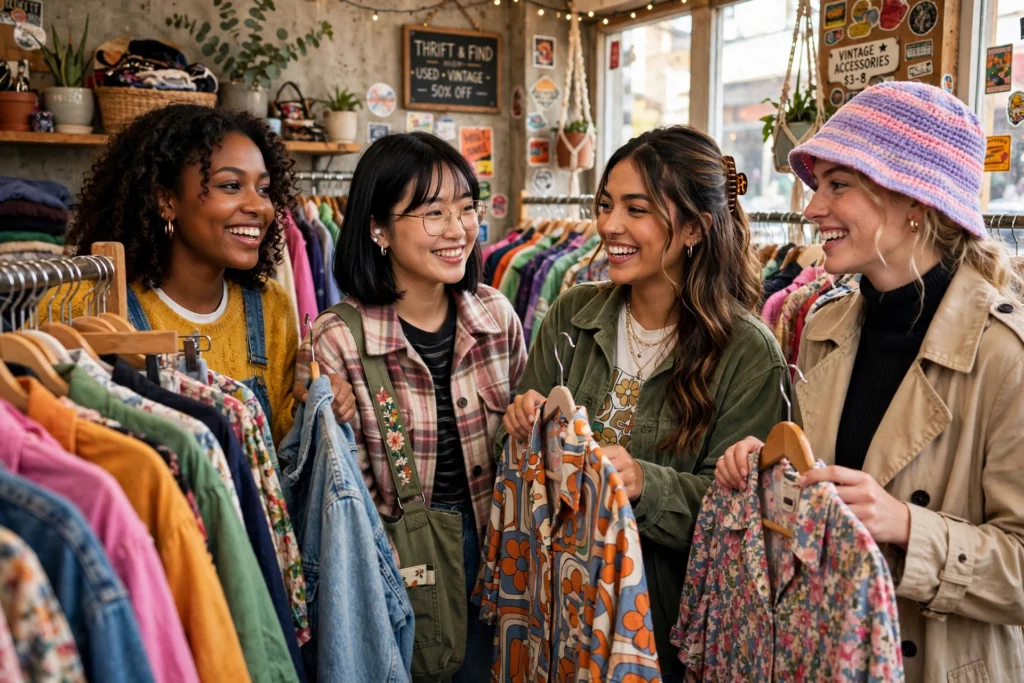
The way consumers shop for clothing is changing. What was once viewed primarily as a way to save money is rapidly becoming a mainstream part of fashion retail. From thrift stores and consignment shops to online marketplaces, vintage boutiques, flea markets, swap meets and neighborhood tag sales, consumers are increasingly choosing pre-owned and “pre-loved” clothing over buying everything brand new.
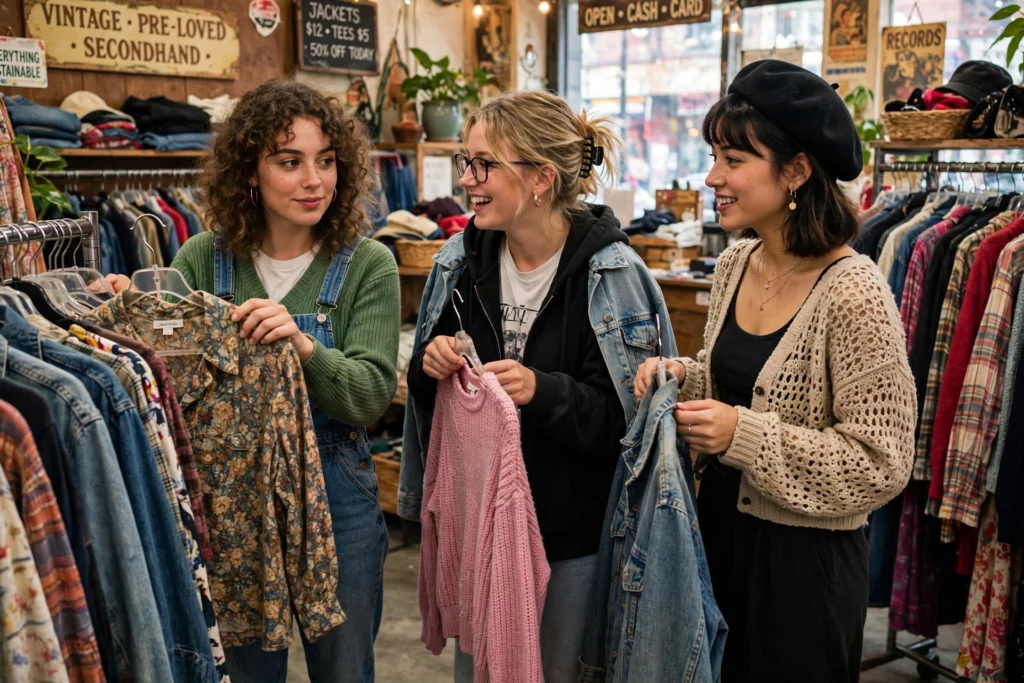
And this isn’t simply a passing trend. The secondhand clothing market has become a massive global industry with substantial growth projected for the years ahead.
According to ThredUp’s 2026 Resale Report, prepared in partnership with GlobalData, the global secondhand apparel market is projected to reach approximately $393 billion by 2030. The report says the market is already roughly 10% of total global apparel spending and is growing about twice as fast as the overall apparel market.
The United States is an especially important market. Earlier ThredUp research projected the U.S. secondhand apparel market would reach $74 billion by 2029, after growing 14% in 2024—five times faster than the broader retail clothing market. Online resale alone was expected to reach $40 billion by 2029.
More Than Just Online Resale
When people hear “resale,” they often think about websites and apps where consumers buy and sell clothing. Online marketplaces are certainly an enormous part of the industry, but they represent only one piece of the secondhand clothing economy.
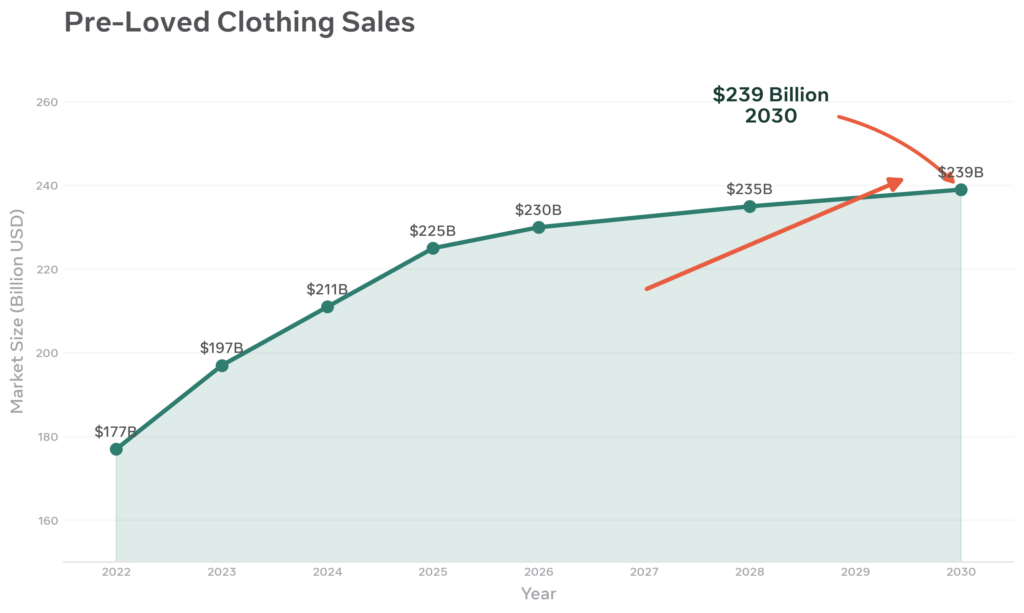
Brick-and-mortar stores remain an important destination. Thrift stores, consignment stores, vintage clothing shops and specialty resale retailers allow shoppers to physically inspect clothing before purchasing it. For many consumers, the opportunity to discover unusual or vintage items is part of the appeal.
Then there are the thousands of flea markets, swap meets, tag sales, yard sales and estate sales operating throughout the country. These informal markets can be particularly attractive to bargain hunters because prices can be substantially lower than conventional retail or even many online resale platforms.
The digital marketplace has nevertheless changed the game. Consumers can now search for specific brands, sizes, styles and vintage pieces from sellers across the country—or even around the world. According to ThredUp, online resale grew 23% in 2024, and 56% of consumers who purchased secondhand apparel that year did so online.
Why Are Consumers Buying Used Clothing?
Price is obviously one of the biggest factors. Consumers can often find quality clothing for considerably less than the cost of purchasing comparable new items.
But affordability isn’t the only reason. Younger consumers in particular are increasingly interested in sustainability, reducing textile waste, finding unique fashion and getting more value from their purchases. McKinsey reports that 41% of consumers look to secondhand outlets when searching for apparel deals, while 60% say secondhand clothing provides the best value for their money.
There is also a growing recognition that clothing doesn’t necessarily lose all of its value simply because it has been worn before. Designer pieces, vintage clothing, limited editions and sought-after brands can actually retain significant resale value.
A Market With Room to Grow
The secondhand clothing industry is evolving from a niche market into a major component of global fashion retail. Online marketplaces are making resale more convenient, traditional stores are expanding their secondhand offerings, and millions of consumers continue to participate through local thrift stores, flea markets, swap meets and tag sales.
With the global secondhand apparel market projected to approach $393 billion by 2030, pre-owned clothing is no longer simply an alternative to buying new. It is becoming an important part of the future of fashion itself.
Recommend0 recommendationsPublished in Uncategorized