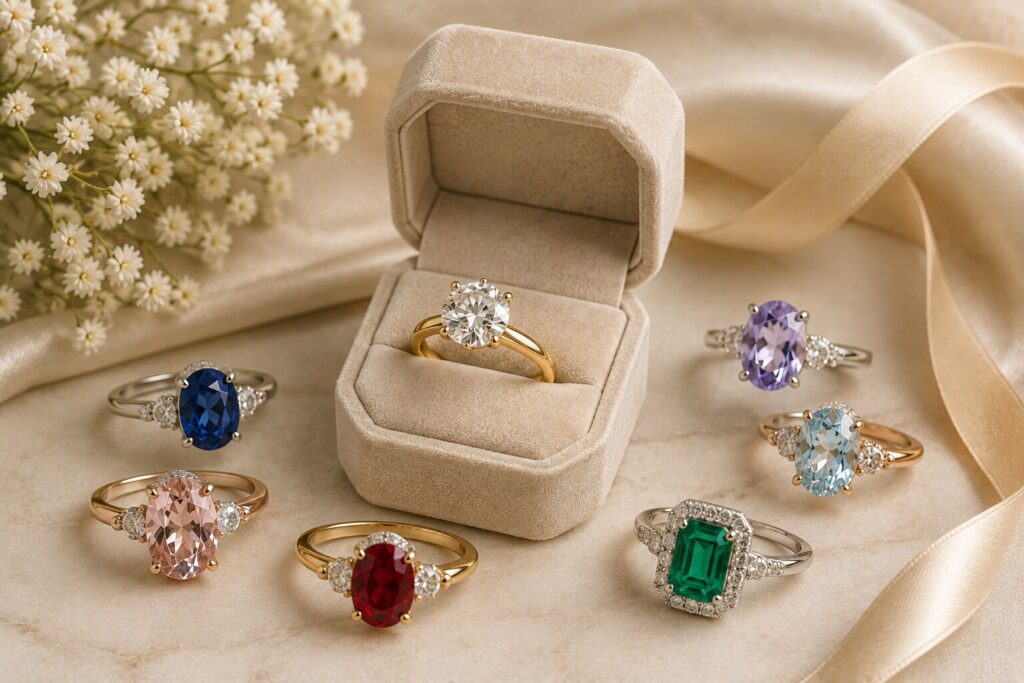
Engagement rings hold a special place for couples, representing a symbol of love and lifetime commitment to each other. So, choosing the best stones for engagement rings requires special attention because not all gems are suitable to be that centerpiece. Of course, diamonds are the first choice when we talk about an engagement ring, but now couples are exploring other gemstones that offer uniqueness, meaning, and more affordable price points.
Rings are supposed to be worn more frequently in everyday life, so you should select the gem that balances beauty with durability to ensure it stands up to everyday wear for decades to come. Here is everything you need to make an informed decision before you buy the most important piece of jewelry in your life.
How You Should Judge Stones For Your Engagement Ring
It’s needless to say that rings require stones that are able to keep up with everyday hurdles because rings face more exposure and impact than any other jewelry piece. So, when you start selecting the best gemstones for engagement rings, consider these key factors:
Hardness & Durability:
How resistant the stone is to scratching. Choose minerals that rank 7 or higher to ensure longevity.
Toughness:
How well the stone handles impact without chipping.
Long-term Wear:
How the stone holds up after years of friction, cleaning, sunlight, and daily life.
Personal Style:
Choose a ring that reflects your unique personality and relationship, whether that means a classic look or something meaningful that defines your love.
Budget:
This is also an important factor to keep in mind. But prioritize what matters to you, which is the quality of the stone. Prices vary dramatically by stone quality, value, and type. Lab-grown options are also available for many major stones, which also offer great value.
Top Recommended Gemstones for Daily Wear Choices
Looking for natural gemstones for engagement rings? End your search with these gemstones that offer the best combination of hardness, durability, and long-term wearability.
Diamond (Mohs 10):
There is no need to mention that diamonds are the classic benchmark for engagement rings, as this is the hardest natural material on Earth. It is exceptionally resistant to scratches, chips, and other forms of damage. Natural mined diamonds are expensive, while lab growns cost less.
Fire: High | 1 Carat Price: $3,800 to $10,000 Natural Mined | Lab Grown Price for 1 carat: $400 to $1,500 | Best For: Buyers who want maximum scratch resistance, premium stone with sparkle, timeless appeal, and a traditional engagement ring.
Moissanite (9.25 to 9.5):
It is one of the most cherished diamond alternatives and nearly as hard as diamonds. It won’t cloud over time, scratch easily, and holds its clarity and sparkle permanently. This is a lab-created gem, which makes it more affordable because natural ones exist in very tiny numbers.
Fire: Higher than diamond | Lab Grown Price for 1 carat: $200 to $600 | Best For: Buyers who want maximum sparkle like diamond at low cost.
Sapphire (Mohs 9):
It is very popular for its exceptional scratch resistance, durability, and color range. Its rich color range is what captivates couples: blue, pink, yellow, teal, and white. Sapphires cost much less than a diamond of the same size.
Fire: Moderate | 1 Carat Price: $1,000 to $10,000 Natural Mined | Lab Grown Price for 1 carat: $50 to $500 | Best For: Buyers who want a colorful gemstone with great durability.
Ruby (Mohs 9):
Made of the same mineral family as sapphire, which is corundum, which means it also has excellent durability and hardness. Ruby is considered as the symbol of deep love and its red color makes it the most popular choice for an engagement ring. It is rare and expensive.
Fire: Moderate | 1 Carat Price: $1,000 to $50,000 Natural Mined | Lab Grown Price for 1 carat: $100 to $1,000 | Best For: Buyers who want bold, meaningful and want to own a completely unique natural gem for an engagement ring.
Popular Softer Alternative Gemstones (Requiring Mindful Care)
These stones are also highly durable for daily wear but with some care considerations. They are beautiful and offer great fire and brilliance but they may scratch or break if you won’t give them proper attention.
Emerald (Mohs 7.5 to 8):
Most cherished gem among couples for engagement rings because of its green hues and love symbolism. Hard knocks can cause it to crack and chip easily that is why protective settings and regular care are strongly recommended.
Fire: Low to Moderate| 1 Carat Price: $1,750 to $10,000 Natural Mined | Lab Grown Price for 1 carat: $300 to $1,800 | Best For: Buyers who want a collectible gem for a ring or who prioritize green color and are willing to provide more careful maintenance.
Aquamarine (7.5 to 8):
It is highly admired for its refreshing blue to blue-green hues. However, it is softer than some of the other gems, but with the right care and setting, it can be suitable enough for daily use. Its calming hues and durability make it a favourite choice for engagement rings.
Fire: Moderate| 1 Carat Price: $100 to $1,000 Natural Mined | Lab Grown Price for 1 carat: $70 to $80 | Best For: Buyers who want a cooler, ocean blue color palette, exceptional clarity at an accessible price point.
Morganite (Mohs 7.5 to 8):
Popular engagement choice because of its delicate pink, peach, or salmon tones. While it is softer than some of the gems, morganite is still durable enough for regular use if paired with the right setting and proper care. It offers a soft, romantic look to the jewelry piece it fits.
Fire: Moderate| 1 Carat Price: $100 to $300 Natural Mined | Best For: Buyers who want a romantic look and pastel colors for a ring at an accessible price point.
What Gemstones Shouldn’t Be Used for Engagement Rings?
The above-listed gems work well with regular wear, but there are still many gemstones that are not suitable for engagement rings. Avoid stones:
That have a lower hardness level and greater susceptibility to damage.
That are easily scratched or highly prone to chipping.
That ranks 1 to 6.5 on the Mohs scale because this means they are very soft and are not meant to be worn daily. Includes opal, pearl, moonstone, and many others.
Start Your Search for the Perfect Gemstone: Wrapping Up
So, now after finishing this blog, you will understand well what you should look for in a stone for your engagement ring. A diamond is not always the best choice; sometimes you need to be honest to express your feelings in a more colorful way, and gemstones are the perfect way to fulfill that. Ultimately, the right stone choice will narrow down to your preference, life, budget, and the person who is supposed to wear it.
Lastly, this is a suggestion that natural gemstones are usually rare and expensive, so to purchase safely, choose a seller who deals in authentic gemstones for sale and provides proper certification and description of the stone.
Recommend0 recommendationsPublished in Uncategorized