Quick answer: Build a capsule wardrobe by identifying your regular activities, selecting compatible clothes you already enjoy wearing, and filling only the gaps that prevent complete outfits. The right number of pieces depends on your climate, laundry routine, work requirements and personal preferences. A useful capsule makes dressing easier without turning your wardrobe into a rigid uniform.
A well-planned wardrobe should work in ordinary life: a commute, a video call, an unplanned dinner and a weekend walk. It should also feel like yours. Neutral clothes can help items coordinate, but color, print and expressive accessories belong in a capsule when they are pieces you consistently wear.
What is a capsule wardrobe?
A capsule wardrobe is a deliberately chosen group of clothing and accessories that combines into outfits for your current needs. Some people use one year-round core with seasonal additions; others create smaller groups for work, leisure or travel. Neither approach requires throwing away everything that sits outside the capsule.
Think of it as an organization method rather than a universal shopping list. A nurse in Toronto, a creative professional in London and a remote worker in Brisbane will need different clothes. Their common task is to find reliable combinations, keep those pieces accessible and stop buying duplicates that do not solve a real dressing problem.
Start with your actual week
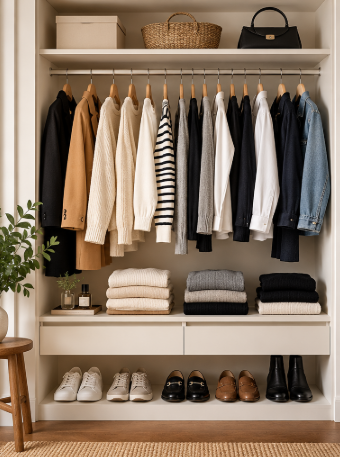
Write down the situations you dressed for during the last two weeks. Separate office days, active travel, social occasions, caring responsibilities and time at home. Then compare this list with the space each type of clothing occupies in your closet. An imbalance often explains why a full wardrobe still seems difficult to use.
Pull your most-worn pieces and ask what makes them successful. It may be a forgiving waistband, practical pockets, an easy fabric or a color that goes with your shoes. Those details are more valuable than an aspirational image of how you think you ought to dress. Keep occasionwear outside the everyday group if it serves occasional events well.
Choose a flexible color palette
Choose two or three base colors from clothes you already own, then add accent colors you enjoy. Navy, charcoal, cream and brown are possible starting points, but none is compulsory. If your favorite print includes several colors, use it as a bridge between otherwise separate items.
Check the actual shades together in daylight. Two garments described as beige may have very different undertones. A small difference can look attractive when it appears deliberate, while an almost-matching suit may look accidental. Photograph complete combinations so you can remember what works without arranging the same experiment every morning.
Build outfits before adding pieces
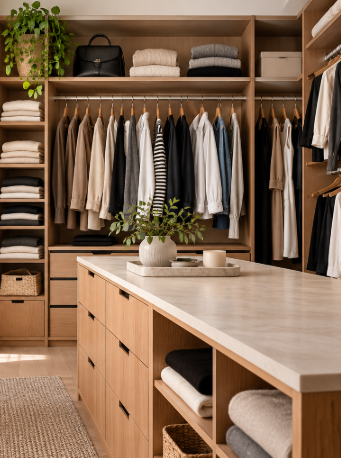
Make several complete outfits on your bed or a garment rail. Include the shoes, underwear, outer layer and bag, because a top-and-trouser pairing alone is not a finished solution. Try each outfit while moving, sitting and carrying the things you normally take with you.
A simple starting group might include several tops, two or three bottoms, a versatile layer and footwear for your main activities. Adjust those proportions rather than treating them as a rule. Dresses, coordinated sets, skirts, tunics or tailored separates can all serve as the foundation. The useful question is how often you can wear each piece comfortably.
Make room for different bodies and dress codes
Fit preferences vary, and a capsule should accommodate that variety. Petite shoppers may find shoulder placement and hem length more important than the label’s size designation. Plus-size shoppers may prioritize consistent fit across several silhouettes, rather than buying only the shapes a generic checklist recommends.
For menswear, compare how jackets work with both tailored trousers and your regular casual bottoms. For gender-inclusive dressing, organize by cut and function rather than department labels. If clothing requirements change for work, faith or mobility, build those requirements into the plan from the beginning instead of treating them as inconvenient exceptions.
Adapt your capsule to local weather
In the USA, climate differs between cities and regions, so build for your actual location. A Seattle commuter may need a practical rain layer, while a person in a warm inland climate may value lightweight coverage. Canada also varies widely; check your local conditions instead of adopting a generic North American winter list.
UK readers can make transitional layers useful across unpredictable days, while Australian and New Zealand readers should account for the reversed seasonal calendar. In October and November, many Southern Hemisphere wardrobes move toward warmer weather. Keep a small set of relevant layers available rather than packing everything away at the first change in temperature.
Choose fabrics by use and care
Read the garment’s care label before buying. Consider how often you are willing to hand-wash, iron or arrange professional cleaning. A beautiful fabric that needs more maintenance than your routine allows may spend most of its life waiting to be worn. Fiber content alone does not tell you how a garment will behave; construction, lining and finish matter too.
Test opacity in good light, inspect seams and check whether pockets sit smoothly. Avoid assuming that expensive means durable or that a natural fiber automatically makes the whole product environmentally preferable. Look for specific, verifiable information about the garment rather than broad claims such as conscious, green or planet friendly.
Shop secondhand with a clear checklist
Start with a written gap, such as a rain layer that fits over work clothes. Record your measurements and compare them with the seller’s garment measurements. Sizes can vary between brands, countries and production periods, so the number on a label is only a starting reference.
Ask about stains, odors, repairs and fabric composition when the listing is unclear. Examine closures and areas that receive wear, including cuffs, underarms and the inside thigh. Include delivery and likely alterations in the total cost. If returns are limited, allow extra time to decide rather than treating a low price as a reason to hurry.
Repair, repeat and reassess
A capsule becomes more useful when its pieces remain wearable. Sew on a loose button, address a dropped hem and clean footwear according to its material instructions. Store garments in a way that supports their shape, and let worn pieces air appropriately before deciding whether they need washing.
At the end of a month, note which outfits you repeated and which pieces never left the rail. A rarely worn item may need a different pairing or a small alteration, not immediate disposal. Keep a short list of unresolved gaps and revisit it before shopping. This creates a wardrobe that develops from experience rather than constant replacement.
Capsule wardrobe questions
How many pieces should a beginner include? Start with enough complete outfits for the time between laundry days, plus the layers and specialist clothing your routine requires. A count of thirty or forty can be a personal experiment, but it is not a standard everyone must meet.
Can a capsule include trends? Yes. Add a trend when it coordinates with existing outfits and you expect to enjoy wearing it beyond a single photograph. You can also borrow, rent or restyle an existing piece to explore a new silhouette before committing to a purchase.
Does this approach guarantee sustainable fashion? No wardrobe system guarantees a particular environmental outcome. Wearing suitable pieces repeatedly, caring for them and avoiding unnecessary purchases are practical habits, but product-specific environmental claims need their own evidence.
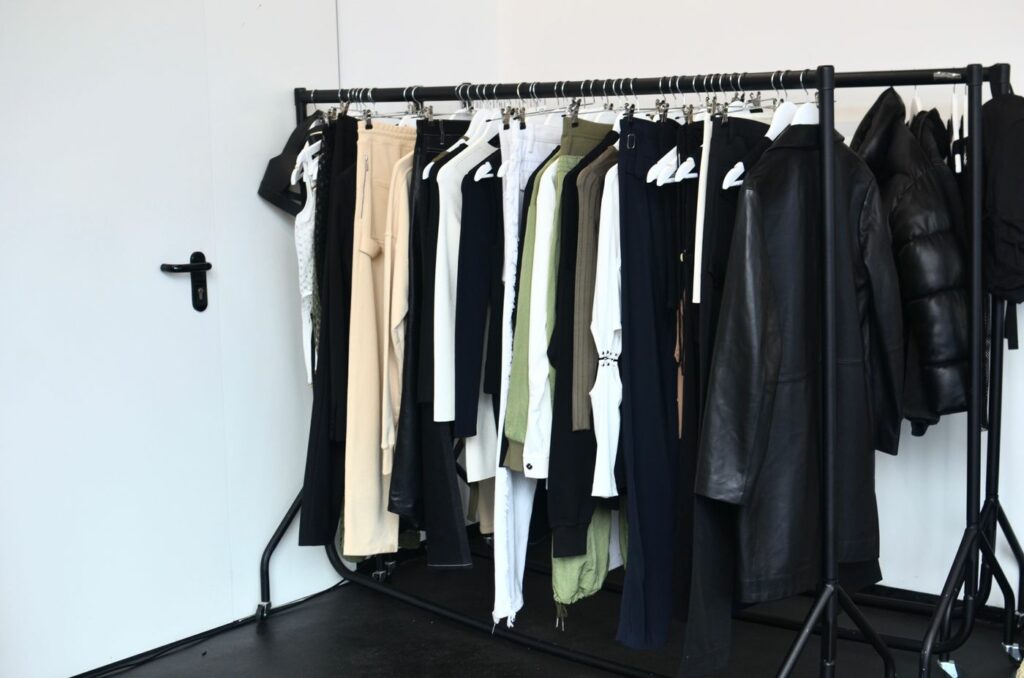
Cover caption: Capsule wardrobe essentials start with a coordinated clothing rail and outfits that suit your real routine. Illustrative stock photograph. Image source: Skylar Kang / Pexels, https://www.pexels.com/photo/collection-of-garments-hanging-on-rack-6045285/
Editorial note: This is a practical wardrobe-planning guide, with regional examples for the USA, UK, Canada, Australia and New Zealand. It does not assume identical seasons, sizes or workplace dress codes across those countries.
Recommend0 recommendationsPublished in apparel, street style