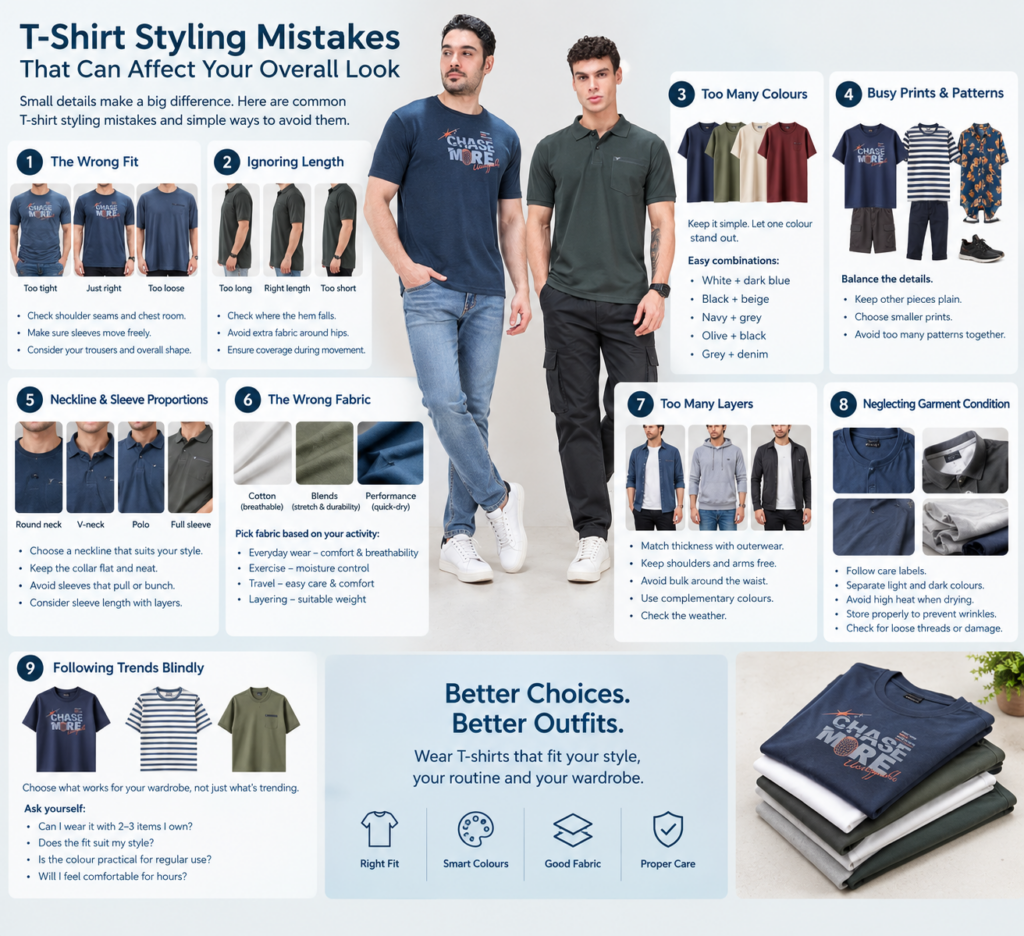
A T-shirt is a wardrobe essential, but wearing one well involves more than choosing an attractive colour or design. Small details, such as fit, length, sleeve shape, and colour coordination, can influence how an entire outfit looks. Even comfortable clothing may appear unbalanced when it does not work well with the rest of the outfit.
Understanding these styling mistakes can help you make better use of your wardrobe without spending unnecessarily on new clothes. From selecting suitable combinations to maintaining garment quality, a few practical adjustments can make everyday dressing easier.
1. Choosing the Wrong T-Shirt Fit
Fit is one of the first things to consider when styling a T-shirt. A garment that is too tight may pull across the chest and shoulders, while an excessively loose one can create unwanted bulk.
Different fits serve different purposes. Slim-fit designs create a closer silhouette, regular fits provide a balanced shape, and oversized styles offer a relaxed appearance.
How to avoid this mistake
– Check that the shoulder seams sit comfortably.
– Ensure the chest allows natural movement.
– Choose sleeves that do not restrict your arms.
– Check the length while standing and sitting.
– Consider how the T-shirt works with your trousers.
When choosing mens t-shirts, do not rely entirely on size labels. Compare garment measurements and consider the silhouette you want. The right fit should complement your proportions while allowing you to move comfortably.
2. Ignoring T-Shirt Length and Proportion
A T-shirt’s length affects how it works with jeans, shorts, and other bottoms. A top that extends too far below the hips may make an outfit look unbalanced, while one that is too short may rise when you bend or reach.
The ideal length depends on the garment’s design and the proportions of the complete outfit.
For example, a regular-length T-shirt generally works well with jeans and chinos. An oversized design may complement relaxed-fit trousers, provided the combination does not create excessive bulk.
Practical tips:
– Check where the hem falls in relation to your waistband.
– Avoid excessive fabric gathering around the hips.
– Make sure the T-shirt provides enough coverage during movement.
– Evaluate the entire outfit rather than judging the top alone.
These simple checks can help create a more balanced appearance without requiring complicated styling techniques.
3. Combining Too Many Colours
Colour coordination helps an outfit look cohesive. However, combining several strong shades without considering how they work together can make the clothing appear disconnected.
You do not need to limit yourself to neutral colours. The goal is to create a clear relationship between the T-shirt, trousers, shoes, and accessories.
Colour combinations to try
– White T-shirt with dark blue jeans.
– Black T-shirt with beige trousers.
– Navy T-shirt with light grey bottoms.
– Olive T-shirt with black trousers.
– Grey T-shirt with dark denim.
If you choose a brightly coloured T-shirt, neutral bottoms can help balance the outfit. Alternatively, wearing different shades of a similar colour can create a coordinated appearance.
When selecting t shirts for men, consider how easily the colour will work with clothes you already own. This helps you create more outfits from fewer pieces.
4. Pairing Bold Prints With Competing Patterns
Printed T-shirts can add personality, but combining several prominent patterns may make an outfit look crowded. A large graphic paired with patterned trousers and detailed accessories can create too many competing focal points.
Instead of avoiding prints, learn how to balance them.
A T-shirt with a large graphic often works well with plain jeans, chinos, or shorts. A small chest print leaves more room to experiment with other design elements. If you want to combine patterns, look for colours or shapes that complement one another.
Before choosing a printed design, consider:
– The size and placement of the graphic.
– The number of colours in the print.
– Whether your trousers already feature a pattern.
– How the design works with your footwear and outerwear.
The aim is to make each element contribute to the outfit without competing for attention.
5. Overlooking Neckline and Sleeve Details
Necklines and sleeves influence the shape of a T-shirt more than many people realise. A stretched collar, awkward sleeve length, or neckline that does not suit the intended outfit can affect its overall appearance.
Round-neck T-shirts are versatile for everyday outfits, while V-neck styles create a more open neckline. Polo T-shirts introduce a collar for a slightly more structured look, and full-sleeve designs provide additional coverage.
To avoid common mistakes:
– Choose a neckline that suits your preferred style.
– Check that the collar lies flat.
– Avoid sleeves that pull when you move your arms.
– Consider sleeve length when adding a jacket or overshirt.
– Replace garments when stretched necklines noticeably affect their shape.
Paying attention to these details can help simple clothing look more considered.
6. Choosing Fabric Without Considering the Occasion
Fabric affects how a T-shirt feels, hangs, and performs throughout the day. A heavy material may feel uncomfortable in hot weather, while an extremely lightweight garment may not provide the structure needed for certain layered outfits.
Cotton t shirts for men are often suitable for everyday wear because cotton can feel soft and breathable. However, cotton may retain moisture longer than some synthetic performance fabrics. Blended materials can offer different combinations of stretch, durability, and drying speed.
Choose fabric according to your activities:
– Daily wear: Consider comfort, breathability, and ease of care.
– Exercise: Look for fabrics designed to support movement and manage moisture.
– Travel: Prioritise comfort over long periods and consider maintenance requirements.
– Layering: Choose a fabric weight that sits comfortably beneath jackets or overshirts.
Selecting material for its intended purpose helps prevent discomfort and improves the usefulness of each garment.
7. Adding Too Many Layers
Layering can add variety to an outfit, but excessive bulk may restrict movement and affect proportions. A thick T-shirt beneath a fitted jacket, for example, can create bunching around the shoulders and arms.
Start with a comfortable base layer and add an outer garment that provides enough room for movement. A lightweight T-shirt often works well beneath an open shirt, hoodie, or jacket.
Keep these points in mind:
– Match the thickness of the inner layer to the outer garment.
– Check that the shoulders and sleeves move freely.
– Avoid excessive fabric gathering around the waist.
– Coordinate colours between layers.
– Consider the weather before adding extra clothing.
Layering should improve comfort and appearance rather than make movement difficult.
8. Neglecting T-Shirt Condition
Even a well-coordinated outfit can look untidy if the T-shirt is stained, faded, wrinkled, or stretched out of shape. Garment condition is an important part of styling because it influences how clean and organised an outfit appears.
Simple care habits can help maintain your clothing:
– Follow the care label when washing.
– Separate colours where appropriate.
– Turn printed garments inside out before washing when recommended.
– Avoid excessive drying heat if the fabric may shrink.
– Store clean T-shirts properly to minimise wrinkles.
– Check for loose threads, damaged prints, and stretched collars.
The best t shirts for men are not simply those with attractive designs. Their usefulness also depends on comfort, fit, and how well they retain their appearance with appropriate care.
9. Following Trends Without Considering Personal Style
A popular design may look appealing, but it will not necessarily suit your preferences or wardrobe. Buying every trending colour, graphic, or oversized shape can leave you with clothing that is difficult to combine.
Instead, think about your routine and the styles you naturally enjoy wearing. If you regularly wear jeans, versatile solid-colour T-shirts may be useful. If you prefer relaxed outfits, oversized designs may suit you. Polo styles can offer another option when you want a more structured casual appearance.
Before choosing a new design, ask yourself:
– Can I combine it with at least two or three items I own?
– Does the fit suit my preferred outfits?
– Is the colour practical for regular use?
– Will I feel comfortable wearing it for several hours?
This approach encourages thoughtful wardrobe choices rather than purchases based only on temporary trends.
10. Practical Styling Checklist
Before leaving home, use this quick checklist to review your outfit:
– Fit: Are the shoulders, chest, sleeves, and hem comfortable?
– Proportion: Does the T-shirt length work with your trousers or shorts?
– Colour: Do the shades complement one another?
– Print: Does the design work with the rest of the outfit?
– Occasion: Is the style appropriate for your planned activity?
– Fabric: Is it suitable for the weather and expected movement?
– Condition: Is the garment clean and free from noticeable damage?
– Layering: Can you move comfortably without excess bulk?
– Footwear: Does it complement the overall style?
– Comfort: Can you sit, walk, and raise your arms without restriction?
These checks take little time but can help you avoid common styling problems. Once the basics are covered, you can experiment with prints, colours, and accessories according to your preferences.
Conclusion
T-shirt styling becomes easier when you pay attention to fit, proportion, colour, fabric, and garment condition. Avoiding these common mistakes does not require expensive clothing or strict fashion rules. Choose combinations that suit your activities, keep patterns balanced, and maintain your garments properly. Dazzle Sportswear offers men’s sportswear and casual clothing, making everyday considerations such as comfort, fit, and versatility useful when exploring different T-shirt styles. Understanding these details helps you build practical outfits that reflect your personal style.
Recommend0 recommendationsPublished in Uncategorized