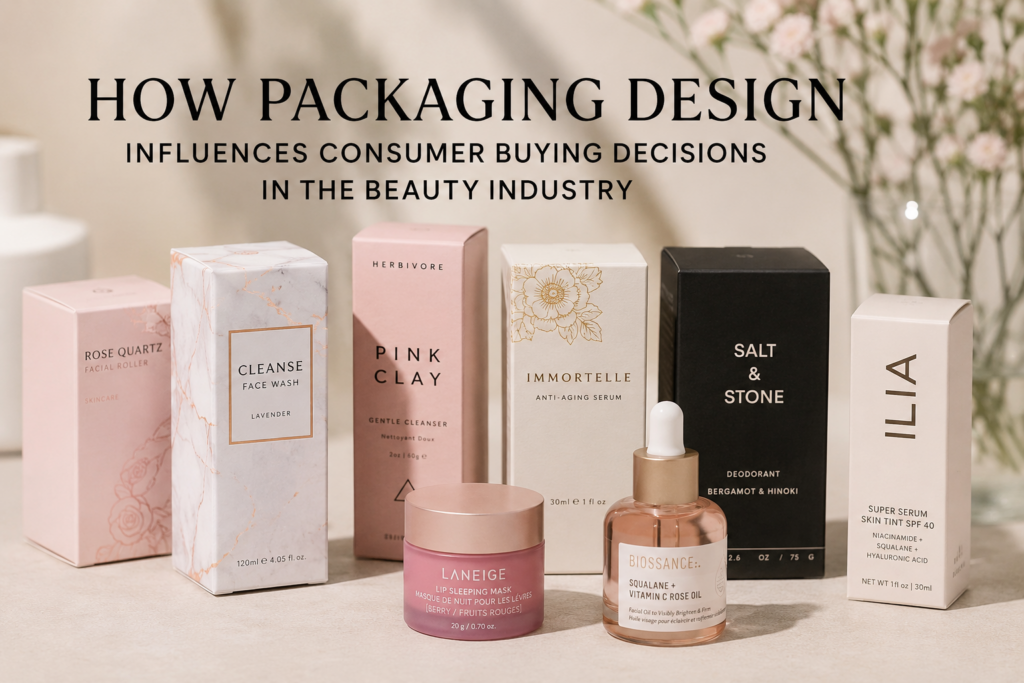
Walk into any beauty aisle or scroll through any skincare storefront, and the pattern is immediate: your eyes land on a product before you read a single word about it. That split-second visual reaction is not accidental. It is the result of deliberate packaging decisions that directly control whether a consumer picks up a product or walks past it. For beauty brands, packaging design is not a finishing touch added after the formula is ready. It is one of the most powerful purchase drivers in the entire buying journey.
First Impressions Happen in Under 7 Seconds
Research consistently shows that consumers form a first impression of a product within 3 to 7 seconds of seeing it on the shelf. In that window, packaging color, structure, label hierarchy, and material quality are doing all the persuasion. No ingredient list has been read. No claims have been processed. The decision to engage or ignore has already been made.
This matters enormously for beauty brands because the category is among the most visually saturated in retail. A typical skincare planogram can hold 30 to 50 SKUs within the same linear foot. Differentiation through packaging is not optional; it is the baseline requirement for shelf survival. Brands that invest in professional beauty packaging design report measurably higher shelf pick-up rates, stronger trial conversion, and reduced reliance on promotional pricing to drive volume.
Premium packaging also increases perceived product value by 15 to 30% compared to identical formulations in commodity packaging. For a skincare brand positioning in the mid-premium or prestige segment, this is not a small number. It means a product with a well-designed, high-quality pack can command a higher price point without changing a single ingredient, which directly expands margin and supports brand positioning with retail buyers.
The Investment Case: Why Beauty Brands Are Spending More on Packaging
Investment in beauty packaging design is accelerating globally. The Indian cosmetic packaging market size reached USD 3.8 billion in 2025. Looking forward, IMARC Group expects the market to reach USD 5.1 billion by 2034, exhibiting a growth rate (CAGR) of 3.13% during 2026-2034. Beauty brands are channeling significant capital into packaging development because the ROI is traceable: better packaging leads to faster sell-through, stronger retailer confidence, and higher customer lifetime value through repeat purchase and positive unboxing experiences.
Sustainable packaging is one of the highest-investment areas within this shift. Over 80% of beauty brands are now actively prioritizing sustainable packaging and ethical sourcing as a procurement mandate, not just a brand value. Consumers are driving this demand, with 90% of younger shoppers willing to pay a premium for products in eco-friendly packaging and 44% actively factoring environmental impact into their purchase decisions. Products carrying ESG-related packaging claims grow at 28% versus 20% for non-ESG alternatives, according to McKinsey research. Refillable packaging formats have seen sales growth exceeding 364% in recent tracking periods, signaling that the refill economy is now a mainstream commercial reality, not a niche experiment.
Smart packaging is another high-growth development area. The Indian smart packaging market, incorporating QR code labels, NFC-enabled authentication, and serialized barcodes, is valued at over USD 4.4 billion in 2025 and is projected to reach USD 8.8 billion by 2034. For beauty brands managing compliance across multiple markets, anti-counterfeit requirements, and digital consumer engagement, smart label integration has moved from a premium option to a practical necessity.
What Makes Packaging Influence the Purchase Decision
- Color Psychology
- Color is processed before language. In beauty, color conventions carry strong category signals: white and soft neutrals communicate cleanliness and clinical efficacy; black and gold anchor prestige and luxury; pastels and botanical greens signal natural and wellness positioning. A color choice misaligned with the brand’s price point or product promise creates cognitive friction at the shelf that suppresses purchase intent, even when the consumer cannot articulate why.
Label Design and Typography
Typography carries both brand personality and compliance obligations simultaneously. A bold geometric sans-serif communicates science-backed formulation. A refined serif communicates heritage and authority. Beyond brand expression, label design must accommodate regulatory requirements: ingredient declarations in descending order of concentration, batch numbers, manufacturing and expiry dates, net content, manufacturer details, warning statements, and barcode or QR code elements. Getting this balance wrong results in either compliance failures that delay market entry or visual clutter that undermines the brand positioning. Neither outcome is acceptable.
- Material and Finish
- The physical quality of packaging communicates quality before the product is opened. Glass signals premium. Matte soft-touch finishes on polymer convey a luxury feel at an accessible cost. Airless pump dispensers signal clinical precision and protect active ingredients from oxidation, which is both a functional and brand benefit. Textured labels, embossed closures, and foil accents each add a tactile and visual dimension that mass-market alternatives cannot replicate. These are not decorative decisions; they are pricing and positioning decisions.
Functional Design and Sustainability
Functional design directly protects revenue. Packaging that leaks in transit, fails to dispense correctly, or allows product contamination drives returns, negative reviews, and customer loss. In e-commerce beauty, where packaging cannot be touched before purchase, functional integrity is the entire post-purchase brand experience. At the same time, sustainability is now a functional requirement for retailer compliance. With the beauty industry producing 120 billion units of packaging annually, and regulatory frameworks like India’s EPR mandates tightening, beauty brands that have not built a credible, sustainable packaging development roadmap are carrying increasing compliance and commercial risk.
Regulatory and Labelling Compliance
Compliance is not a design afterthought. In India, CDSCO cosmetic labelling requirements mandate specific content, format, and placement obligations across every SKU. For brands selling internationally, FDA requirements for the US, EU Cosmetics Regulation for European markets, and GCC standards for Gulf distribution layer additional obligations onto every label format. A label that fails compliance at a retailer’s onboarding check or a customs inspection represents wasted investment across design, production, sampling, and launch preparation. Building regulatory compliance into the packaging design process from day one is significantly less expensive than correcting it after production.
How IMARC Engineering Helps in Packaging Design and Labelling Services
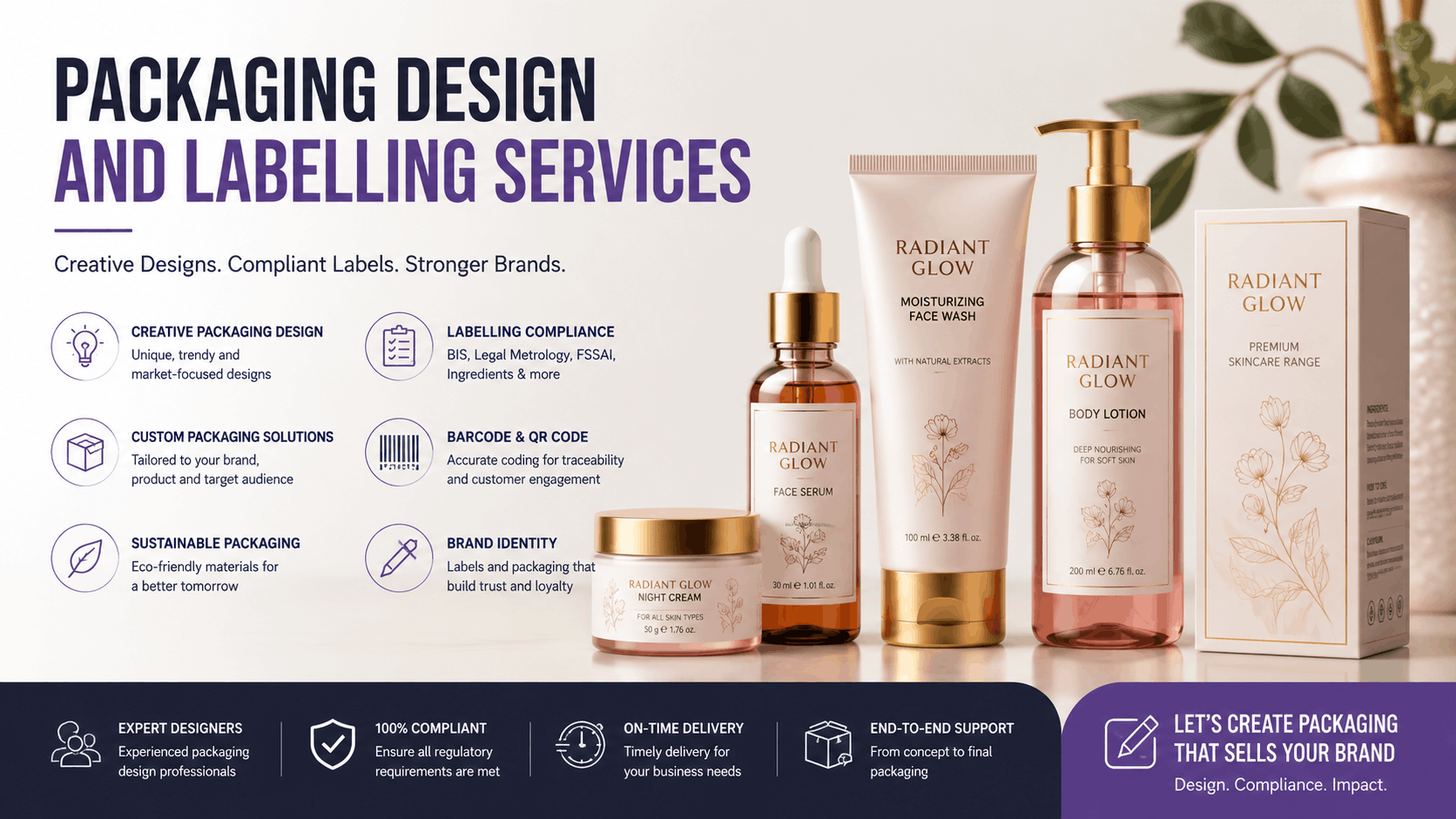
IMARC Engineering provides end-to-end packaging design and labelling services purpose-built for manufacturers and beauty brands that need packaging to perform across aesthetics, compliance, sustainability, and cost simultaneously. Their multidisciplinary team combines graphic design expertise with packaging engineering rigor, ensuring that every solution is both visually compelling and technically sound.
The engagement covers the full development lifecycle: requirements analysis and packaging strategy aligned with brand objectives, structural and graphic concept development with 3D mockups and prototype creation, label compliance development across CDSCO, FDA, FSSAI, and international regulatory frameworks, sustainable packaging consultation including material optimization and life cycle assessment, performance testing covering distribution simulation and stability validation, supplier qualification, and printing coordination through to commercial launch.
For beauty brands entering modern trade retail, scaling into export markets, or redesigning existing packaging to meet sustainability or compliance requirements, IMARC Engineering’s structured process reduces development timelines, prevents the costly rework that typically results from late-stage compliance corrections, and delivers packaging that earns shelf placement and drives consumer purchase decisions from day one.
To discuss your packaging requirements, connect with the IMARC Engineering team and explore how their packaging design and labelling expertise can help your beauty brand compete more effectively across Indian and international markets
Recommend0 recommendationsPublished in Uncategorized