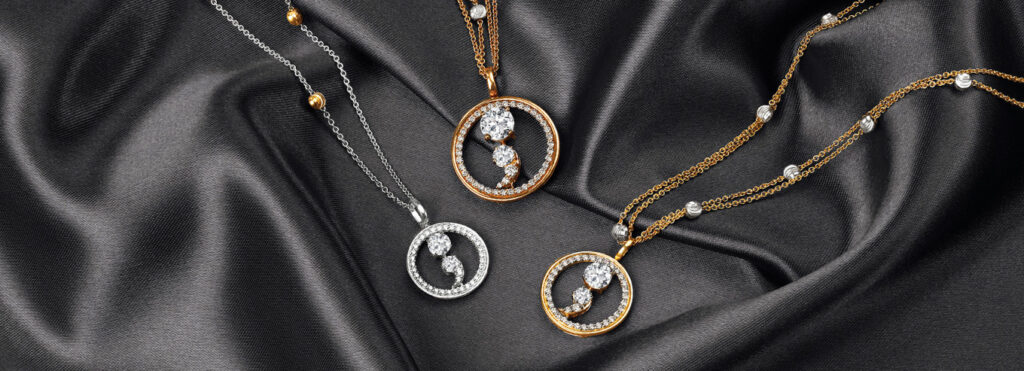
One of those purchases that is both thrilling and nerve-racking is purchasing a diamond pendant. The jewellery industry is full of complicated jargon, exorbitant costs, and yes, con artists that take advantage of your ignorance to sell you something that should last a lifetime.
Know What You’re Actually Buying
Let’s start by discussing the fundamentals. A diamond placed in a metal setting and suspended on a chain is called a diamond pendant. Sounds easy, doesn’t it? However, there is a wide range of quality, cost, and authenticity within that criteria.
Cut, colour, clarity, and carat weight are the four Cs that you must first comprehend. The quality and cost of a diamond are determined by these four elements, which any trustworthy jeweller will be happy to discuss.
- The diamond’s cut describes how nicely it has been faceted and formed. A diamond with a good cut would sparkle brightly. This is the most crucial element.
- A scale from D (colourless) to Z (noticeable yellow or brown) is used to grade colour. For the majority of pendants, diamonds in the G-I class are visually stunning and reasonably priced.
- Clarity quantifies interior defects, also referred to as inclusions. A diamond that is “eye-clean”—that is, one with imperfections that are invisible without magnification—is ideal for daily use.
- Carat is only the diamond’s weight. If the cut is bad or there are obvious defects in the stone, bigger isn’t always better.
By being aware of these four factors, you can avoid being swayed by sophisticated marketing jargon when you visit the store.
Always Ask for a Grading Certificate
This cannot be negotiated. A grading certificate from an accredited gemological laboratory should be included with any real diamond pendant that is worth the cost. The American Gem Society (AGS) and the Gemological Institute of America (GIA) are the two most reputable.
The dimensions, cut grade, colour, clarity, and other details of the diamond are all disclosed on the certificate. It’s a warning sign if a seller is unable to produce a certificate or offers one from an unknown lab.
Since the expense of certification would exceed the value of the stone, some tiny stones (less than 0.30 carats) might not be verified. That makes sense. But always ask about important things.
Don’t Fall for These Common Scams
This is where reality sets in. You should be aware of the following tactics used by dishonest sellers:
Bait & Switch: A stunning diamond pendant is displayed in a window or sold online at an amazing price. When you arrive to purchase it, they inform you that it is “sold out” or “not available,” but they would be happy to show you another item that costs twice as much. A deal is most likely fraudulent if it appears too good to be true.
“Original” prices that are inflated: You’ve seen signs that read, “Was $3,000 — Now $999!” Often, the initial price is entirely fictitious in order to give you the impression that you’re receiving a good deal. Before believing a discount is genuine, compare pricing from several different retailers.
Lab-Grown vs. Natural Confusion: Although lab-grown diamonds are chemically identical to actual diamonds, their value is much lower than that of mined diamonds. Although many individuals adore lab-grown diamond pendants, there is nothing wrong with purchasing one; however, you should be aware of what you are receiving. Ask explicitly if the salesperson is evasive about this.
False Carat Weight: The “total carat weight” of some pendants is claimed to include all of the small stones in the jewellery, not just the primary diamond. A pendant with a “1 carat total weight” label may only feature a 0.20 carat primary stone. Always request the precise weight of the centre stone.
“This is the last one.” is a pressure sales tactic. “Someone else is looking at it right now.” “This price is only good today.” These are methods of manipulation. A reliable jeweller will provide you time to reflect and weigh your options. Never allow a sense of hurry to influence your choice.
Buy From Reputable Sources
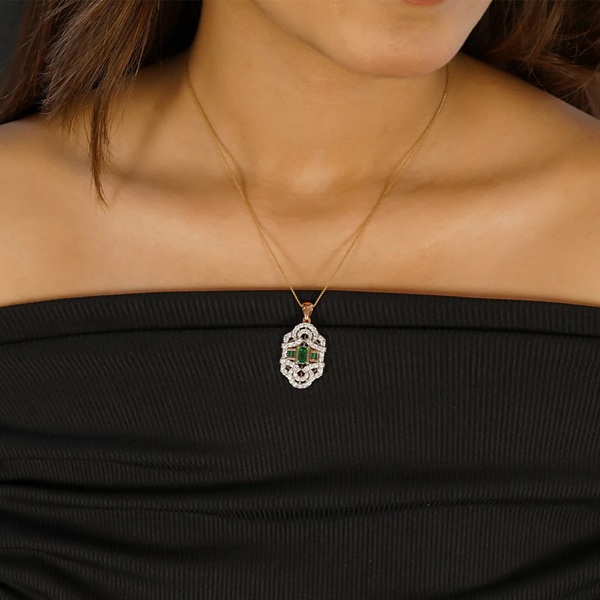
Image is credit by Gems by Uzma
Reputation is crucial whether you’re shopping online or in person. To vet your seller, follow these steps:
Regarding physical stores: Seek out jewellers who belong to trade associations such as the Jewellers of America. Consult Google reviews and get referrals from friends and family. A competent jeweller will take their time answering your enquiries without making you feel hurried or foolish.
Regarding internet purchasing: Choose reputable stores with clear return policies, thorough product images (including 360-degree movies), and independent certification. Sites with a solid reputation include James Allen, Blue Nile, and Brilliant Earth. Examine unbiased reviews from websites other than the retailer’s own.
Verify the return policy at all times. A trustworthy seller will provide a minimum of 30 days for returns. Avoid a website or company that does not accept returns for diamond pendants.
Get an Independent Appraisal
Consider having your diamond pendant assessed by a third party after you’ve bought it, particularly if it’s a big buy. It is possible to verify that the stone matches its certificate and that you were fairly compensated by a professional gemologist or independent jeweller, who has no financial interest in the amount you paid.
For peace of mind, an assessment is well worth the $50 to $150 price range. Consider it akin to a home inspection before purchasing a home.
Set a Realistic Budget and Stick to It
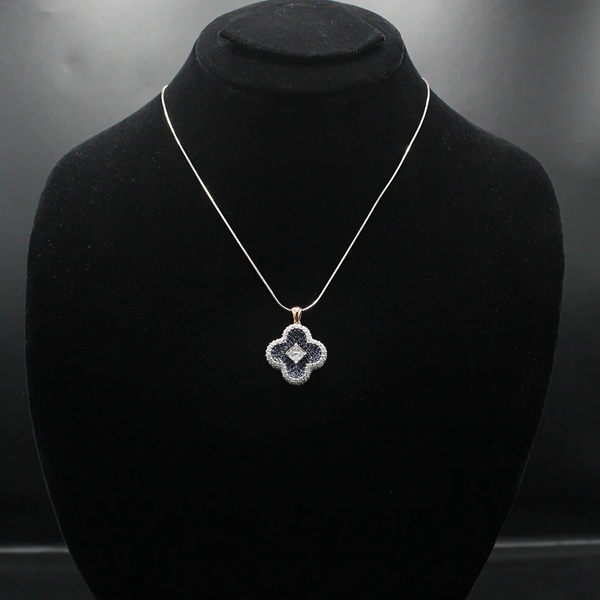
Image is Credit by Gems by Uzma
Walking in without a defined budget is one of the simplest ways to fall victim to scams. In order to gradually upgrade you, salespeople are trained to say things like, “For just a little more, you could get this one instead.” Establish your limit in advance and treat it as a hard cap.
A second mortgage is not necessary to purchase stunning diamond jewellery. Stunning solutions that will truly impress can be found in the $500–1,500 area. Understanding the four Cs will help you prioritise your priorities. For example, you may prefer a smaller, flawlessly cut diamond that sparkles dazzlingly or a slightly larger stone with a lower colour grade. It’s your decision, not the salesman’s.
Have faith in your instincts.
Trust your gut as well after doing all the research, comparing prices, and obtaining certifications. Leave a seller if they make you feel uneasy, brush off your enquiries, or appear evasive when it comes to fundamental facts. Many trustworthy jewellers genuinely take pleasure in assisting customers in selecting the ideal diamond pendant and in feeling satisfied with their acquisition.
The best purchases are those that leave you feeling truly satisfied, knowing exactly what you purchased, and understanding why you paid the amount you did.
To Read More Blog: A Beginner’s Guide To Diamond Cuts
Last Thoughts
Purchasing a diamond pendant, whether as a treat for yourself or as a gift for a loved one, is a significant occasion. Although they do occur, scammers are not always present. With the correct information, you can identify the warning signs, pose the appropriate queries, and locate a piece that is truly worth every cent.
Recommend0 recommendationsPublished in Jewelry