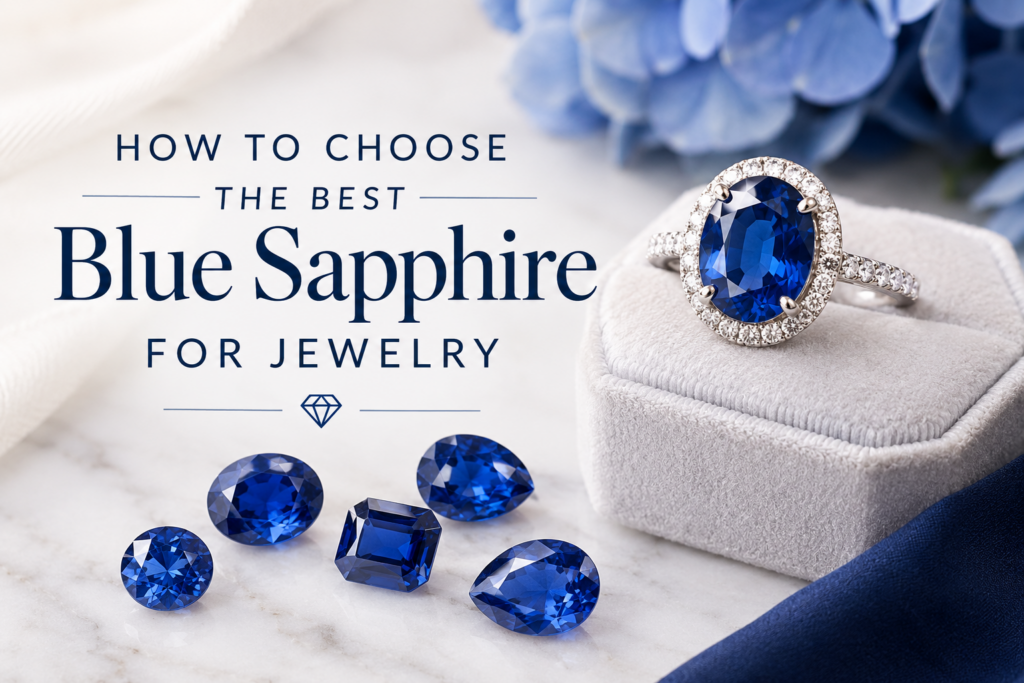
Choosing the right blue sapphire can be more complicated than simply selecting the darkest or largest gemstone available. Blue sapphires come in different shades, origins, cuts, sizes, clarity levels, and treatment conditions.
For someone purchasing a sapphire for an engagement ring, pendant, earrings, or custom jewelry, understanding these differences can make the buying process easier.
The best blue sapphire is not necessarily the most expensive stone. Instead, it should have characteristics that suit the jewelry design, personal preference, and budget.
Start With Color
Color should normally be one of the first things to evaluate.
Blue sapphire can range from pale blue to vivid medium blue and very deep blue.
A well-balanced blue often provides a more attractive appearance than an extremely dark stone.
When examining color, consider:
Hue
Tone
Saturation
Color consistency
Appearance under different lighting
A sapphire that looks beautiful under one light source should also be evaluated under other lighting conditions when possible.
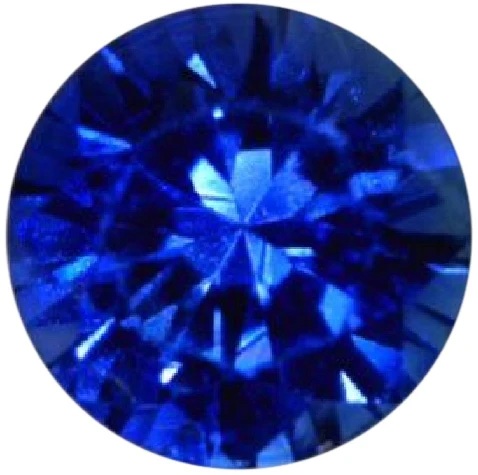
What Is the Ideal Blue Sapphire Color?
There is no single shade that every buyer will prefer.
Some people prefer intense royal-style blue.
Others prefer cornflower blue or lighter blue.
Some buyers specifically look for Kashmir-style color, while others prefer Montana sapphire because of its American origin and distinctive color range.
NW Gems’ collection currently includes Kashmir blue, Montana blue, blue-green Montana, cornflower blue, vivid blue, dark blue, and deep blue sapphire options.
This variety allows buyers to compare different visual styles.
Blue Sapphire Origin
Origin can influence both appearance and market interest.
Major sapphire-producing regions include Sri Lanka, Madagascar, Myanmar, Australia, Africa, Montana, and other locations.
However, origin should not be confused with quality.
A sapphire from one famous location is not automatically better than every sapphire from another location.
The actual gemstone should always be evaluated.
Kashmir Sapphire
Kashmir is one of the most famous historical sapphire sources.
Sapphires associated with Kashmir are particularly famous for rich, velvety blue color.
However, genuine geographic-origin claims can be significant.
If origin has a major effect on price, appropriate laboratory documentation should be considered.
NW Gems currently lists natural extra-fine Kashmir blue sapphire products in its collection.
Montana Sapphire
Montana sapphire is attractive to buyers interested in American gemstones.
It can display blue and blue-green colors.
Because the color range is broader than simply traditional dark blue, Montana sapphire can provide a distinctive alternative.
The current NW Gems collection includes both blue and blue-green Montana sapphire options.
Sapphire Cut
Cut determines the shape and light behavior of the gemstone.
Popular blue sapphire cuts include:
Round
Oval
Princess
Square step
Cushion
Emerald
Round brilliant-style cuts can create lively light return.
Princess cuts provide a modern geometric appearance.
Step cuts can emphasize the gemstone’s color and clean geometry.
The choice should match the jewelry setting.
The [NW Gems blue sapphire collection] includes several different cuts, including round diamond-cut, round faceted, princess and square-step stones.
Choosing Sapphire for a Ring
When selecting a sapphire for a ring, think about how the gemstone will look from different angles.
A center stone should have dimensions that fit the mounting.
The depth of the stone can also matter.
If you are ordering a custom setting, provide the jeweler with the exact gemstone measurements before manufacturing begins.
Blue Sapphire for Engagement Rings
A blue sapphire engagement ring can provide a distinctive alternative to a traditional diamond ring.
The gemstone can be paired with:
White gold
Yellow gold
Rose gold
Platinum
Diamond accents
Blue sapphire and white metal create a cool, modern appearance, while yellow gold can create stronger color contrast.
Blue Sapphire for Earrings
Smaller sapphires work particularly well in earrings.
Matching is important when purchasing a pair.
The two gemstones should ideally be similar in:
Color
Size
Shape
Cut
Clarity
Perfectly identical natural gemstones are not always possible, but good visual matching can create a balanced pair.
Blue Sapphire for Pendants
A sapphire pendant can feature either a small accent stone or a larger center gemstone.
Oval and pear-shaped stones can create elegant pendant designs, while round sapphires provide a more symmetrical appearance.
The pendant setting should allow the gemstone’s color to remain visible.
Natural vs Synthetic Sapphire
- Before purchasing, determine whether the sapphire is natural or laboratory-created.
Natural sapphire forms within geological environments.
Synthetic sapphire is produced through controlled laboratory processes.
Both can have uses, but they should be accurately represented.
If natural origin is important, check the product description carefully.
Sapphire Treatment
Treatment is another major consideration.
Heat treatment is common in sapphire.
Treatment can affect color, clarity and market comparisons.
Buyers should always look for clear disclosure.
NW Gems states that it provides full treatment disclosure, and current blue sapphire listings include treatment information.
Understanding Commercial Grades
Online gemstone sellers sometimes use terms such as AAA, AAA+, AA+, or similar quality labels.
These terms should not automatically be treated as universal laboratory grades.
Instead, look at the actual specifications.
A buyer should consider:
Color
Clarity
Cut
Treatment
Origin
Measurements
Overall appearance
This provides a more meaningful comparison.
Blue Sapphire Size
For jewelry, dimensions can be more useful than carat weight alone.
Two sapphires with identical carat weights can have different dimensions because of their proportions.
Always check the millimeter measurements before ordering a stone for an existing setting.
NW Gems specifically recommends using millimeter measurements when selecting gemstone size.
Blue Sapphire Durability
Sapphire has a Mohs hardness of 9, making it suitable for regular jewelry use.
However, hardness does not mean the gemstone is impossible to damage.
Strong impact can still cause problems, particularly if the stone has fractures or is mounted in a vulnerable setting.
Good jewelry craftsmanship is therefore essential.
Buying Blue Sapphire Online
Online shopping gives buyers access to a large selection.
However, photographs can be affected by lighting and camera settings.
Before purchasing, check whether photographs show the actual stone.
Also review:
Return policy
Treatment disclosure
Gemstone dimensions
Origin
Natural or synthetic status
Available documentation
Researching Gemstones Online
Modern buyers often compare gemstone information online before purchasing.
Technology makes it easier to compare product specifications, gemstone origins, treatment information and jewelry designs.
For readers interested in technology and digital research, CripsyWire publishes practical content about AI, software, online tools, gadgets and technology-related topics.
Final Thoughts
Choosing the best blue sapphire requires looking beyond color alone.
Consider the gemstone’s color, cut, clarity, treatment, origin, dimensions and intended jewelry use.
Whether you prefer Kashmir-style blue, Montana sapphire, cornflower blue, vivid blue or a deeper shade, there are many options available.
The blue sapphire collection from NW Gems offers natural sapphire options from different origins, colors and cuts, making it useful for comparing stones for different jewelry projects.
Recommend0 recommendationsPublished in Uncategorized