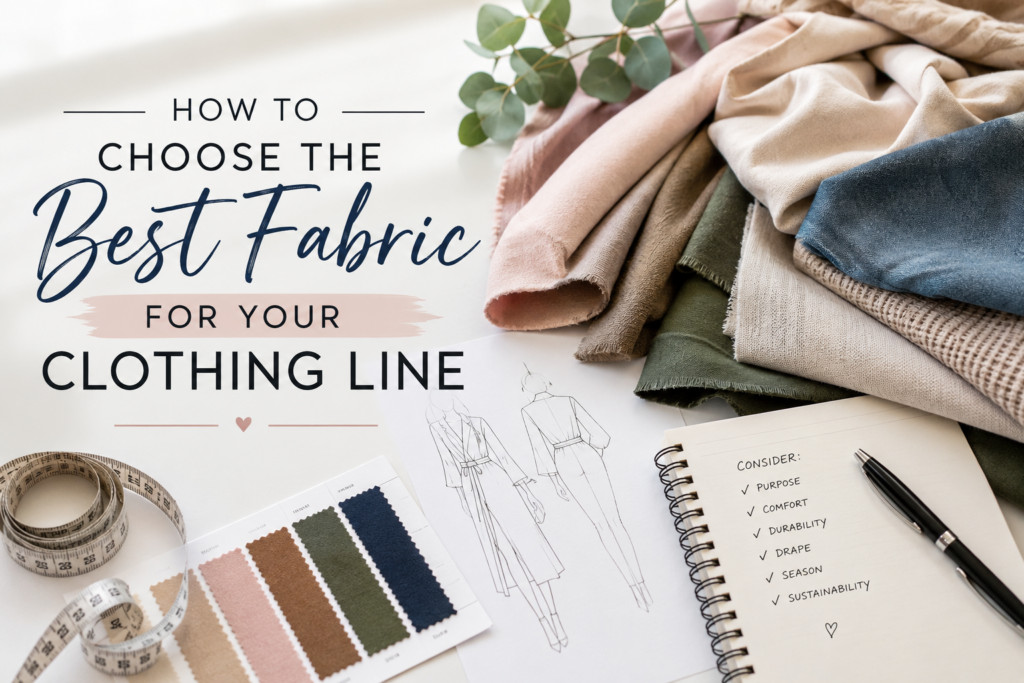
A beautiful fashion collection depends on more than sketches, colors, and current trends. The fabric determines how each garment falls on the body, feels against the skin, and maintains its shape after repeated wear. Even a creative design can appear disappointing when the material looks too thin, wrinkles easily, or does not support the intended silhouette.
For emerging designers, choosing the right fabrics for your clothing collection should happen early in the development process. The material must complement the design while remaining suitable for the customer, season, price point, and intended use.
A premium-looking collection is not necessarily made from the most expensive fabrics; it is made from materials selected with purpose.
Begin With the Garment’s Purpose
Before comparing fabric colors and textures, consider how the finished garment will be worn. A structured blazer requires a material that can maintain clean lines, while a summer dress may need something lightweight with fluid movement.
Activewear requires flexibility, moisture management and recovery. Children’s clothing should prioritize softness, comfort and durability. Eveningwear may depend more heavily on drape, sheen and decorative details.
Ask these questions before selecting a material:
- Where and when will the garment be worn?
- Does it need stretch or structure?
- How much movement should it allow?
- Will the customer expect easy care?
- Is it intended for warm or cold weather?
Answering these questions helps narrow the fabric options before sampling begins.
Pay Attention to Fabric Weight
Fabric weight has a major influence on the appearance of a garment. A material that is too heavy may make a soft design feel stiff, while fabric that is too light may cause a structured garment to lose its intended shape.
Lightweight fabrics such as chiffon, voile and some cotton blends can work well for flowing dresses, blouses and layered pieces. Medium-weight fabrics are often suitable for shirts, skirts, casual dresses and everyday separates. Heavier materials are commonly chosen for jackets, structured pants and outerwear.
Designers should also consider whether the fabric becomes transparent under bright lighting. A material may appear opaque on a small swatch but reveal more than expected when stretched or photographed.
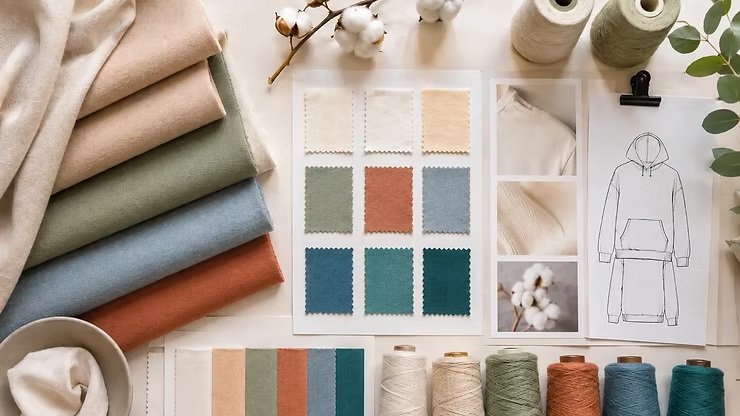
Study the Drape and Movement
Drape describes how a fabric hangs and moves when placed on the body. Some materials fall softly and create fluid folds, while others maintain a defined shape.
A bias-cut dress, for example, needs fabric that moves gracefully. A sculptural top may require a firmer textile capable of supporting volume. Choosing fabric based only on its flat appearance can lead to unexpected results after the sample is sewn.
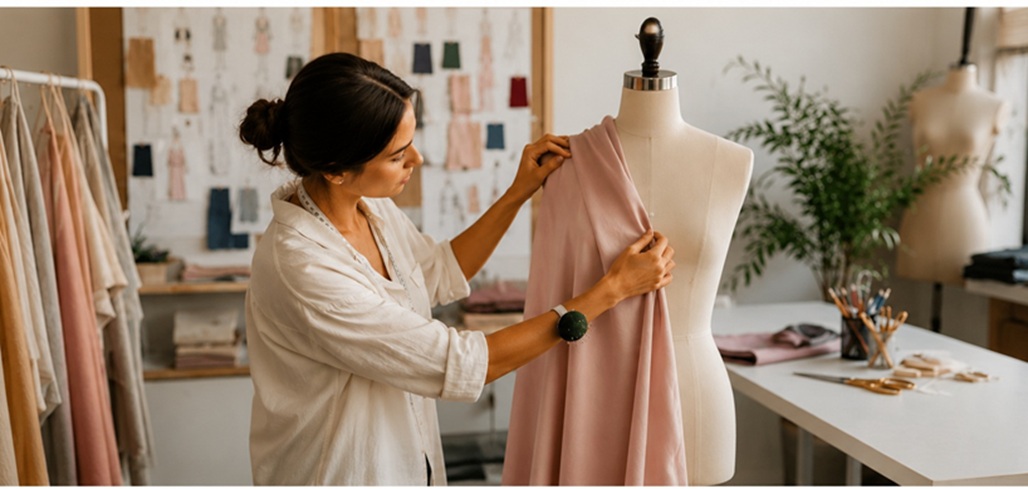
Hold the material against a mannequin or allow it to fall naturally from your hand. Observe whether it creates soft folds, sharp lines, or unwanted bulk. This simple test can reveal whether the fabric supports the design before time is spent developing a complete sample.
Consider Comfort Against the Skin
Customers may initially notice the color and silhouette, but comfort often determines whether they continue wearing the garment.
Rough fibers, stiff seams, and materials that trap excessive heat can reduce the appeal of an otherwise attractive design. When creating garments worn close to the body, test the fabric against sensitive areas such as the neck, waist and underarms.
Fashion should create a visual impression without making the wearer sacrifice comfort.
The target customer also matters. A fabric suitable for occasional eveningwear may not be practical for an everyday dress. Similarly, parents purchasing children’s clothing may prioritize softness and washability over delicate surface details.
Test Stretch and Recovery
Stretch is important for leggings, fitted dresses, activewear and close-fitting tops. However, stretching alone is not enough. The material must also recover and return to its original shape.
A fabric with poor recovery may become loose around the knees, elbows or waist after only a few hours of wear. Before approving it, stretch a sample several times and observe whether it remains distorted.
The direction of the stretch must also match the garment pattern. Some materials stretch across the width, while others provide movement in multiple directions. Understanding this behavior helps improve fit and prevents production problems.
Examine Color Under Different Lighting
Fabric colors can look different under studio lights, daylight, and indoor lighting. Dark shades may reveal unexpected undertones, while pale fabrics may appear more transparent than anticipated.
Review swatches in several lighting conditions before approving the final color. When ordering multiple rolls, confirm that the color remains consistent throughout the material.
This becomes especially important when a design includes matching pieces. A slight variation between the top and bottom may be noticeable when they are worn together.
Think About Care and Durability
A fabric should remain attractive after normal use and cleaning. Before committing to production, test it for shrinkage, fading, pilling, wrinkling, and surface damage.
Wash the fabric according to the care instructions you plan to provide to customers. Measure it before and after washing to check for shrinkage. You should also rub the surface gently to determine whether it develops fuzz or pills.
These tests are particularly important for everyday clothing. Customers expect casual garments to maintain their appearance without requiring complicated care.
Order Samples Before Bulk Production
Photographs and online descriptions cannot fully communicate the weight, texture, stretch, or drape of a material. Always request physical swatches before placing a large fabric order.
Once a promising material has been selected, produce a garment sample and evaluate it on the body. Check how it moves, photographs, and responds to washing. This process may reveal that the fabric needs to be replaced or adjusted before production.
Final Thoughts
Effective fabric selection connects creativity with functionality. Designers must consider the garment’s purpose, structure, comfort, movement, durability, and care requirements rather than choosing a textile based on appearance alone.
The most successful clothing collections feel visually consistent while giving each design the material it needs. By testing fabrics carefully and reviewing them in finished samples, fashion brands can create garments that look polished, feel comfortable and deliver a more premium customer experience.
Recommend0 recommendationsPublished in Uncategorized