Saudi Arabia Women’s Apparel Market Overview
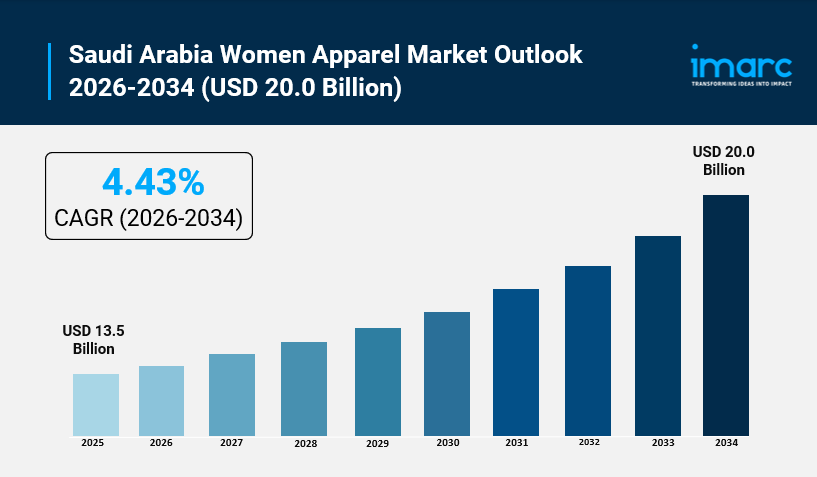
Market Size in 2025: USD 13.5 Billion
Market Forecast in 2034: USD 20.0 Billion
Market Growth Rate 2026-2034: 4.43%
According to IMARC Group’s latest research publication, “Saudi Arabia Women’s Apparel Market Size, Share, Trends and Forecast by Product Type, Season, Distribution Channel, and Region, 2026-2034“, the Saudi Arabia women’s apparel market size reached USD 13.5 billion in 2025. Looking forward, IMARC Group expects the market to reach USD 20.0 billion by 2034, exhibiting a growth rate (CAGR) of 4.43% during 2026-2034.
How AI is Reshaping the Future of Saudi Arabia’s Women’s Apparel Market
AI-powered virtual try-ons and personalized styling tools are making shopping way more fun and practical for Saudi women, cutting return rates significantly while helping them find outfits that mix modern trends with cultural preferences like abayas in a confident way. Local platforms are leading this shift with smart recommendations.
Thanks to government-backed AI training programs under Vision 2030, over 666,000 Saudi women have gained skills in data and AI, boosting female participation in fashion tech and empowering more women to launch or work in apparel businesses that feel relevant to their lives.
Riyadh-based AI fashion marketplace Taffi, with its generative AI stylist Amira, is transforming how women discover and buy clothes by offering personalized, occasion-based suggestions drawn from Middle East trends, making high-quality styling accessible beyond just luxury shoppers.
AI helps brands better predict what Saudi women want by analyzing social media and preferences, reducing unsold stock, and letting them create collections that blend tradition with fresh styles, which supports the growing number of working women who spend more on apparel.
With high smartphone use and digital influence from platforms like Instagram, AI-driven recommendations and augmented reality features are changing everyday shopping habits, letting women explore diverse options seamlessly while brands respond faster to their evolving tastes and needs.
Saudi Arabia Women’s Apparel Market Trends & Drivers:
Women’s apparel in Saudi Arabia is riding a powerful demographic and social wave, with women now accounting for roughly two-thirds of national fashion apparel demand and holding about 65% share of the apparel market by consumer type. Vision 2030 reforms have helped push female labor-force participation well beyond the earlier 30% target, creating a large base of financially independent shoppers who are more willing to trade up into premium abayas, workwear, and occasionwear. At the same time, women under 35 dominate the population, and this young, style-conscious group is highly engaged with local and global trends while still prioritizing modest silhouettes that fit cultural norms, reinforcing key Saudi Arabia women’s fashion market trends 2026 centered on empowerment and evolving style preferences.
Another big growth engine is the shift toward trendy, modest fashion blended with a strong push to build Saudi brands rather than just import global labels. Recent research notes that about 45% of Saudi shoppers explicitly prefer fashion that is both trendy and modest, which naturally favors women’s apparel lines that reinterpret abayas, kaftans, and dresses in more contemporary cuts, colors, and fabrics. Programs like the Saudi Fashion Commission’s “100 Saudi Brands” and its global showcases in places like Selfridges in London are putting female designers and womenswear labels on the international map while also boosting their visibility at home. This mix of cultural pride and modern styling is reshaping wardrobes and lifting demand across mid-range and premium women’s segments.
Digital fashion and e-commerce are the third major driver, fundamentally changing how Saudi women discover and buy clothes. Online fashion revenue in the Kingdom already runs into billions of dollars, with fashion one of the largest e-commerce categories and women’s apparel the single biggest slice within it. Studies show online fashion has grown multiple times in just a few years, contributing around 90% of overall fashion market growth and reaching roughly one-fifth of total fashion retail, as platforms like Shein, Namshi, and local D2C brands offer wide assortments, modest edits, and competitive pricing. With fashion e-commerce expected to capture a much larger share of sales in the near term, women shoppers are driving higher-frequency purchases via mobile, social commerce, and omnichannel journeys that blend store visits with rich digital experiences.
Saudi Arabia Women’s Apparel Industry Segmentation:
The report has segmented the market into the following categories:
Product Type Insights:
Tops and Dresses
Bottom Wear
Innerwear and Sleepwear
Coats
Jackets and Suits
Ethnic Wear
Others
Season Insights:
Summer Wear
Winter Wear
All Season Wear
Distribution Channel Insights:
Supermarkets and Hypermarkets
Exclusive Stores
Multi-Brand Retail Outlets
Online Stores
Others
Regional Insights:
Northern and Central Region
Western Region
Eastern Region
Southern Region
Competitive Landscape:
The competitive landscape of the industry has also been examined along with the profiles of the key players.
Recent News and Developments in the Saudi Arabian Women’s Apparel Market
February 2026: Kering and the Saudi Fashion Commission launch the second edition of the Kering Generation Award X MENA, focusing on sustainable innovations like regenerative materials and circular design to empower regional startups in modest fashion.
January 2026: Saudi luxury brands roll out AR virtual try-on technology in 80% of flagship stores, slashing return rates by 25% and delivering personalized fits for abayas and kaftans through AI avatars.
October 2025: Riyadh Fashion Week introduces luxury abayas featuring embedded NFC chips with blockchain verification, increasing consumer trust by 35% in authentic modest apparel.
Note: If you require specific details, data, or insights that are not currently included in the scope of this report, we are happy to accommodate your request. As part of our customization service, we will gather and provide the additional information you need, tailored to your specific requirements. Please let us know your exact needs, and we will ensure the report is updated accordingly to meet your expectations.
Recommend0 recommendationsPublished in Uncategorized