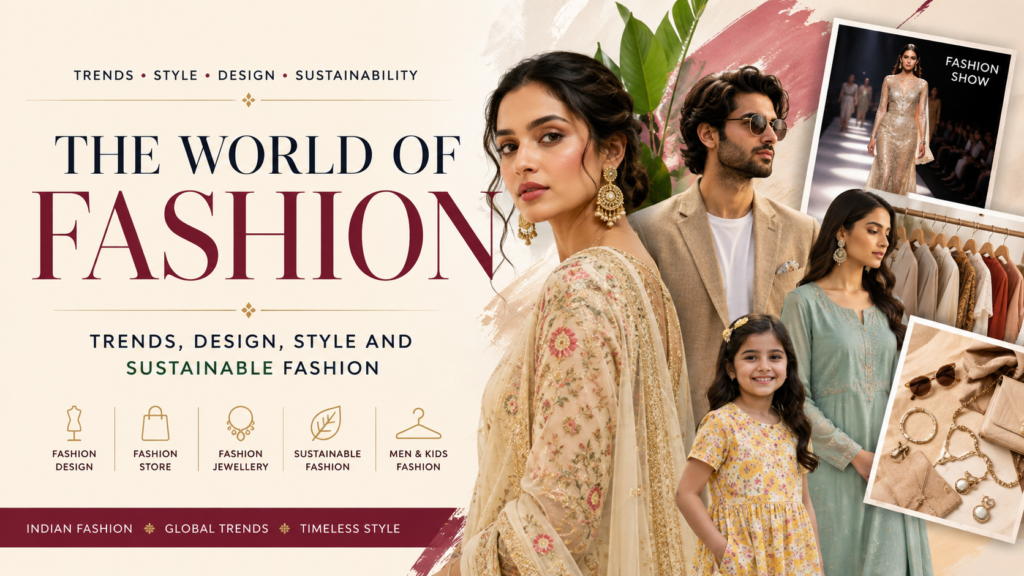
Fashion is one of the most expressive forms of creativity in the world. It influences the way we dress, celebrate, work, socialise, and express our individual personalities. From traditional Indian clothing to contemporary streetwear, luxury collections, fashion jewellery and everyday essentials, fashion constantly changes while continuing to reflect culture and identity.
But what is fashion really? Fashion is more than following the latest trend. It is a combination of design, craftsmanship, culture, creativity and personal expression. Every garment, accessory and collection tells a story about the people who create it and the people who wear it.
Today, the world of fashion includes established designers, independent creators, fashion studios, online retailers, jewellery brands and global marketplaces. Searches for names such as Nykaa Fashion, Myntra Fashion, Max Fashion, Manyavar, Kalki, Urbano Fashion and Utsav Fashion show the enormous variety available to modern shoppers.
At the same time, the industry is experiencing an important transformation as sustainable fashion becomes increasingly relevant to designers and consumers.
What Is Fashion?
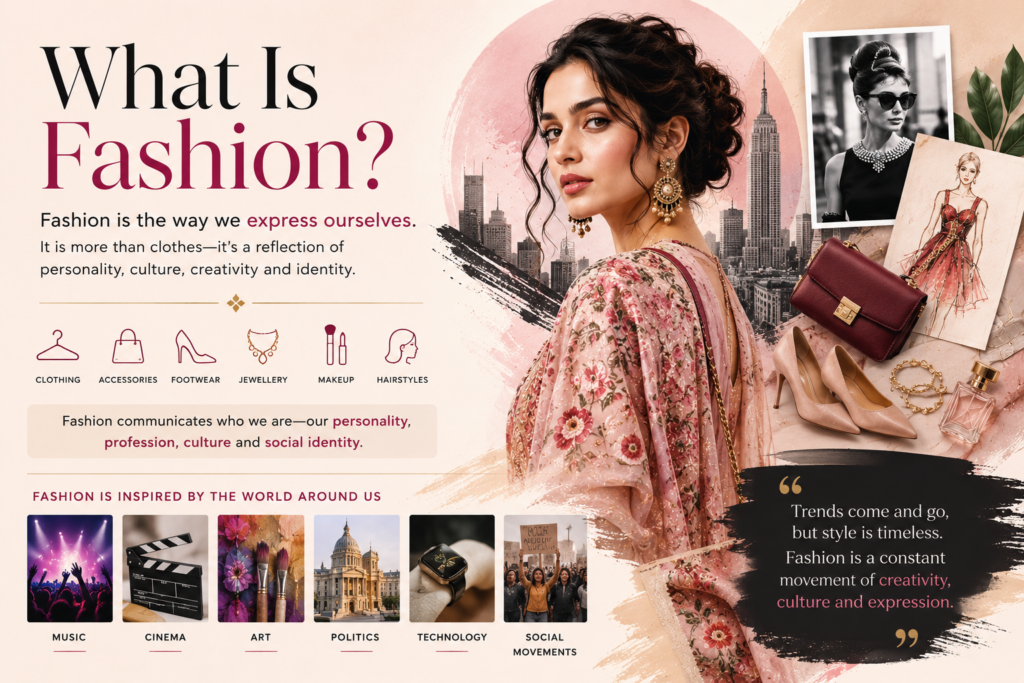
The simplest fashion meaning is the way people express themselves through clothing, accessories and appearance.
However, fashion is much broader than clothes. It encompasses footwear, handbags, jewellery, hairstyles, makeup and other elements of personal style. It can communicate personality, profession, cultural heritage and social identity.
The world around us also influences fashion. Music, cinema, art, politics, technology, architecture, and social movements can all influence how designers create collections.
A particular colour, silhouette or fabric may suddenly become popular, while traditional styles can return decades after they first became fashionable.
This constant movement is what makes fashion so fascinating.
Fashion Design: Where Creativity Becomes Clothing
Fashion design is the creative discipline behind the development of clothing and accessories.
A designer begins with an idea and gradually transforms that concept into a finished product. This can involve researching inspiration, sketching designs, selecting fabrics, experimenting with colours, creating patterns and working with skilled craftspeople.
Fashion design requires both imagination and technical knowledge.
Important areas of fashion design include:
- – Fashion illustration
- – Textile selection
- – Colour theory
- – Pattern making
- – Garment construction
- – Draping
- – Styling
- – Trend research
- – Fashion merchandising
- – Collection development
A successful collection is usually more than a group of attractive garments. The pieces often share a common visual language, creating a recognizable identity.
What Does a Fashion Designer Do?
A fashion designer develops ideas for clothing and accessories and transforms those ideas into wearable products.
Some designers create complete collections, while others specialize in specific areas such as bridal clothing, men’s clothing, children’s fashion, sportswear, footwear or accessories.
A designer may be involved in:
– Researching trends and cultural influences
– Developing creative concepts
– Creating sketches
– Selecting fabrics and colours
– Developing prototypes
– Working with pattern makers
– Reviewing samples
– Refining garments
– Preparing collections
– Presenting designs to customers or retailers
Fashion designers can work independently, for established brands, in fashion houses, in retail companies or within their own fashion studio.
Fashion Designing as a Career
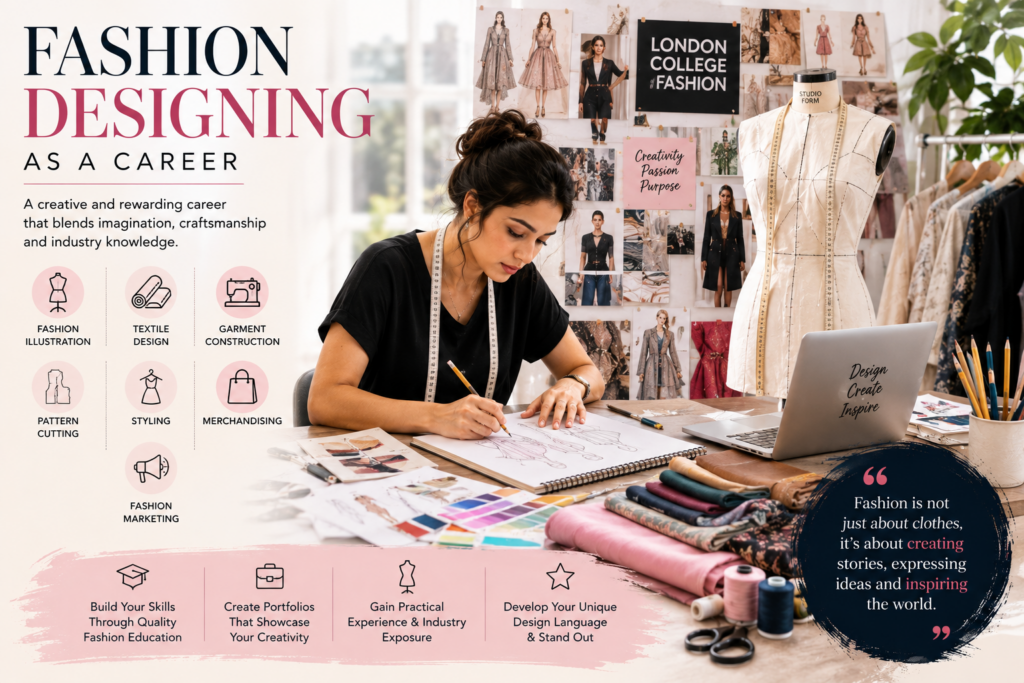
For creative people who are interested in clothing and design, fashion designing can become a rewarding career.
A fashion designing course can introduce students to the creative and technical aspects of the industry. Depending on the course, students may learn fashion illustration, textile design, garment construction, pattern cutting, styling, merchandising and fashion marketing.
Fashion education can also help students build portfolios that demonstrate their creative abilities.
Institutions associated with fashion education, including the London College of Fashion, have contributed to the development of professional fashion education and creative practice.
However, fashion is also an industry where practical experience matters. Developing a personal design language, understanding fabrics and learning how garments are actually constructed can be just as valuable as studying theory.
Fashion Shows: The Art of Presentation
A fashion show transforms clothing into a visual experience.
Designers use fashion shows to present collections through carefully planned combinations of clothing, models, music, lighting, styling and atmosphere.
A collection might communicate a particular theme through:
– Colour palettes
– Fabrics
– Silhouettes
– Accessories
– Hairstyles
– Makeup
– Footwear
– Music
– Set design
Fashion shows can range from intimate presentations by independent designers to major international events featuring established fashion houses.
Today, fashion shows are no longer limited to physical audiences. Digital platforms allow collections to reach viewers around the world almost immediately.
The influence of fashion has also entered gaming and entertainment, with concepts such as fashion show games combining styling, competition and digital creativity.
New Fashion Trends and Changing Personal Style
New fashion trends emerge constantly.
Some trends disappear within a season, while others influence clothing for years. Wide-leg trousers, oversized silhouettes, minimalist wardrobes, vintage-inspired clothing and statement accessories are examples of styles that can move in and out of popularity.
However, following every trend is not necessary.
Personal style is often strongest when trends are combined with clothing that suits an individual’s personality, lifestyle and comfort.
Instead of completely changing a wardrobe whenever a new trend appears, many people choose a few trend-inspired pieces and combine them with existing favourites.
This creates a more personal and adaptable approach to fashion.
Men’s Fashion: Modern Style for Every Occasion
Men fashion has become increasingly diverse.
Modern men’s clothing extends far beyond traditional formalwear. Men can choose from casual streetwear, contemporary tailoring, ethnic clothing, sportswear, smart-casual outfits and minimalist everyday basics.
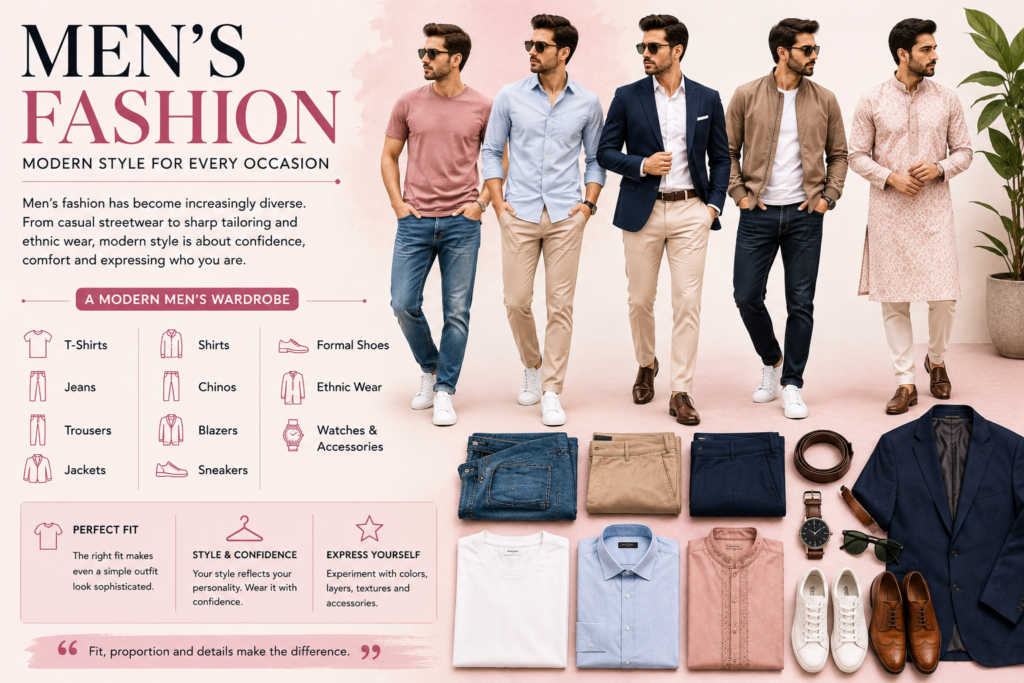
A modern men’s wardrobe might include:
– T-shirts
– Shirts
– Jeans
– Chinos
– Trousers
– Blazers
– Jackets
– Sneakers
– Formal shoes
– Ethnic wear
– Watches and accessories
Fit is one of the most important elements of men’s style. Even a simple outfit can look sophisticated when the proportions, colours and fit work together.
Men’s fashion also increasingly embraces experimentation with colours, layering, textures and accessories.
Kids Fashion: Style That Lets Children Move
Kids fashion needs to combine appearance with practicality.
Children are active, so clothing should allow freedom of movement while being comfortable and durable. Parents often consider fabric, fit, ease of washing and seasonal suitability when choosing children’s clothes.
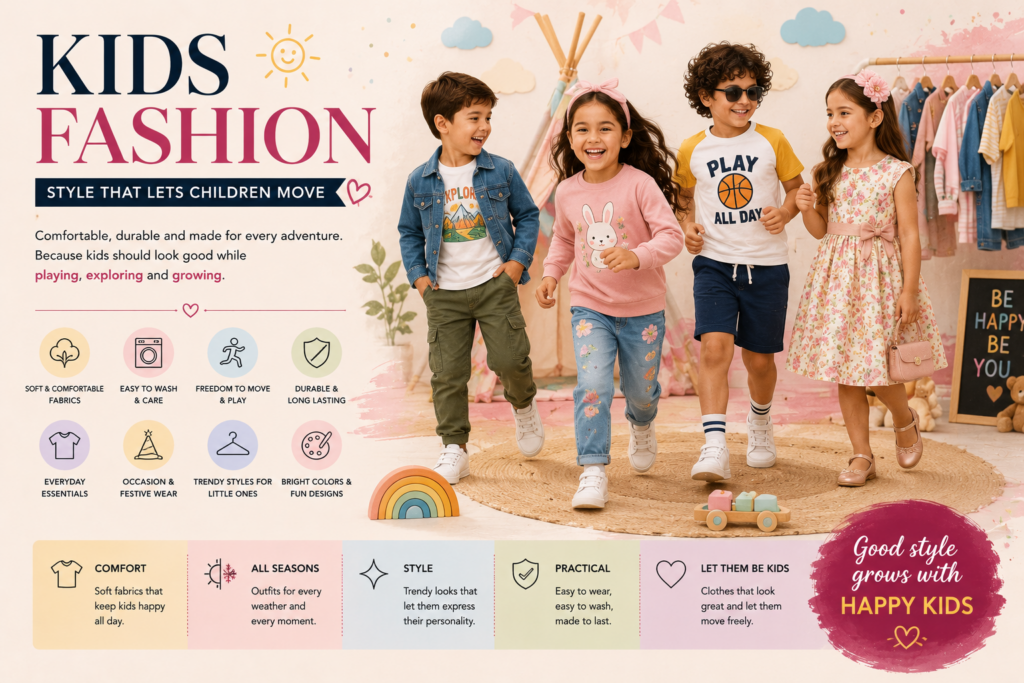
Today’s kids fashion ranges from playful everyday clothing to occasion wear, festive outfits and miniature versions of contemporary adult trends.
Bright colours, creative prints, comfortable fabrics and playful designs remain popular choices for children’s wardrobes.
The best kids fashion is clothing that looks good while allowing children to play, explore and move comfortably.
Fashion Jewellery: Small Details, Big Impact
Fashion jewellery can completely change the character of an outfit.
A simple dress can look dramatically different when combined with statement earrings, a layered necklace or a distinctive bracelet.
Popular categories include:
– Earrings
– Necklaces
– Rings
– Bracelets
– Bangles
– Chains
– Statement jewellery
– Fashion accessories
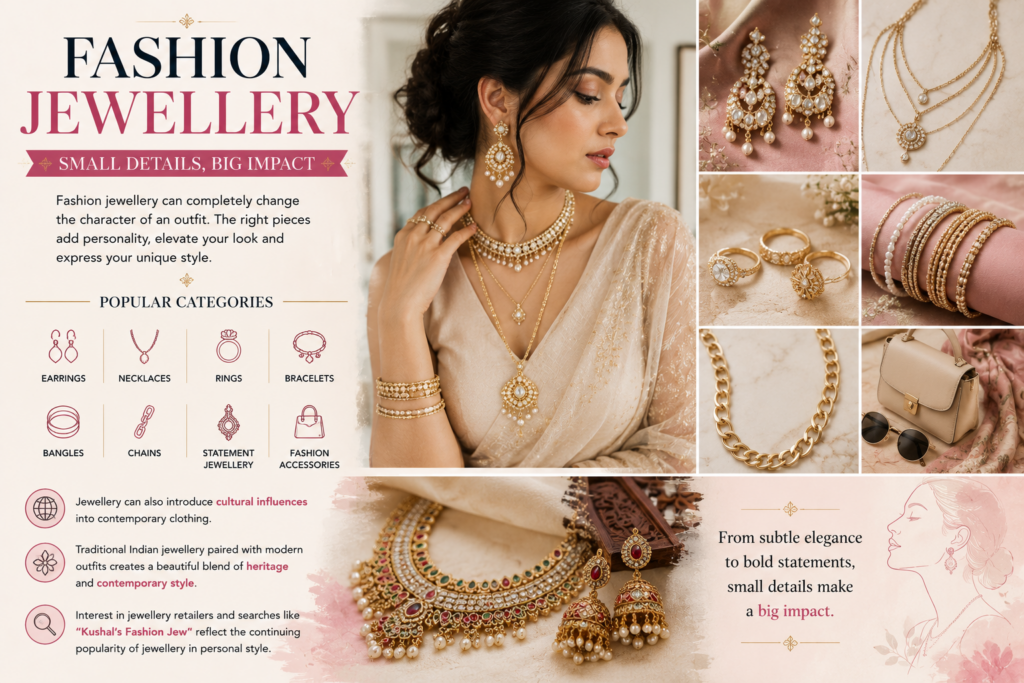
Jewellery can also be used to introduce cultural influences into contemporary clothing.
Traditional Indian jewellery, for example, can be paired with modern outfits to create an interesting combination of heritage and contemporary style.
Interest in jewellery retailers and searches such as Kushal’s Fashion Jew reflects the continuing popularity of jewellery as an important part of personal style.
Sustainable Fashion and the Future of Clothing
One of the most significant developments in modern fashion is sustainable fashion.
So, what is sustainable fashion?
Sustainable fashion describes approaches to creating, producing, purchasing and using clothing that aim to reduce environmental and social impact.
It encourages greater consideration of:
– Material selection
– Manufacturing practices
– Waste
– Product durability
– Reuse
– Repair
– Recycling
– Responsible consumption
– Working conditions
Fast-changing fashion cycles can encourage people to buy clothing frequently and discard it quickly. Sustainable fashion challenges this pattern by encouraging longer-lasting products and more conscious choices.
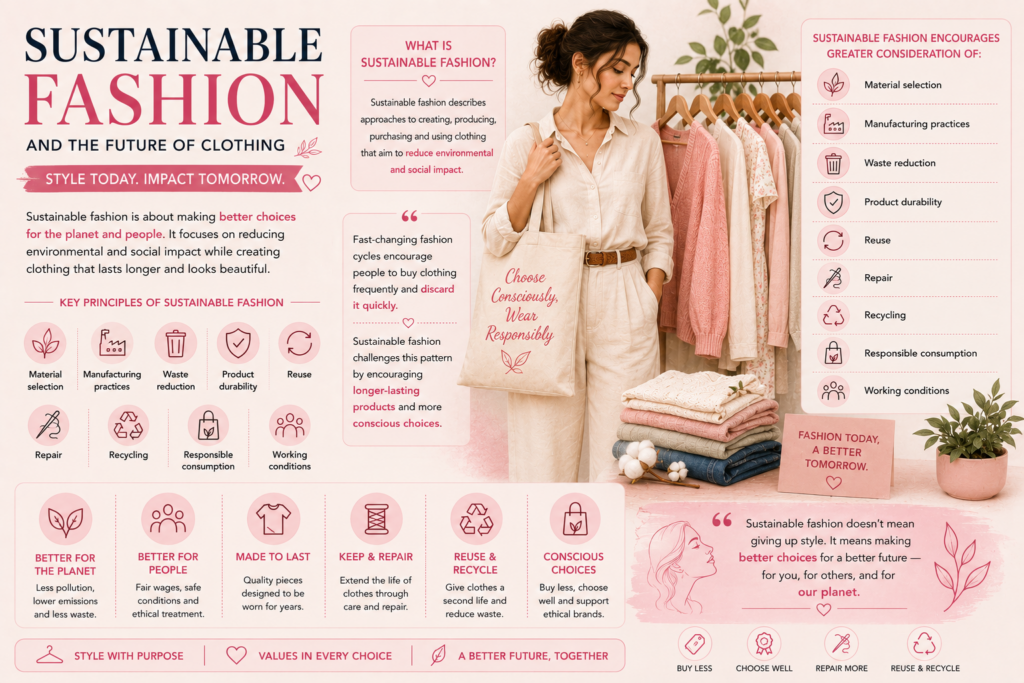
For consumers, sustainable fashion does not necessarily mean giving up style.
It can mean choosing better-quality garments, buying fewer unnecessary items, repairing clothing instead of immediately replacing it, purchasing second-hand products or selecting materials and brands that align with personal values.
Indian Fashion: Tradition Meets Contemporary Design
India has one of the world’s richest fashion traditions.
Indian fashion includes an enormous range of fabrics, embroidery techniques, silhouettes, regional clothing and handcrafted traditions.
Popular examples include:
– Sarees
– Lehengas
– Kurtas
– Sherwanis
– Salwar suits
– Anarkalis
– Dupattas
– Indo-western clothing
– Traditional jewellery
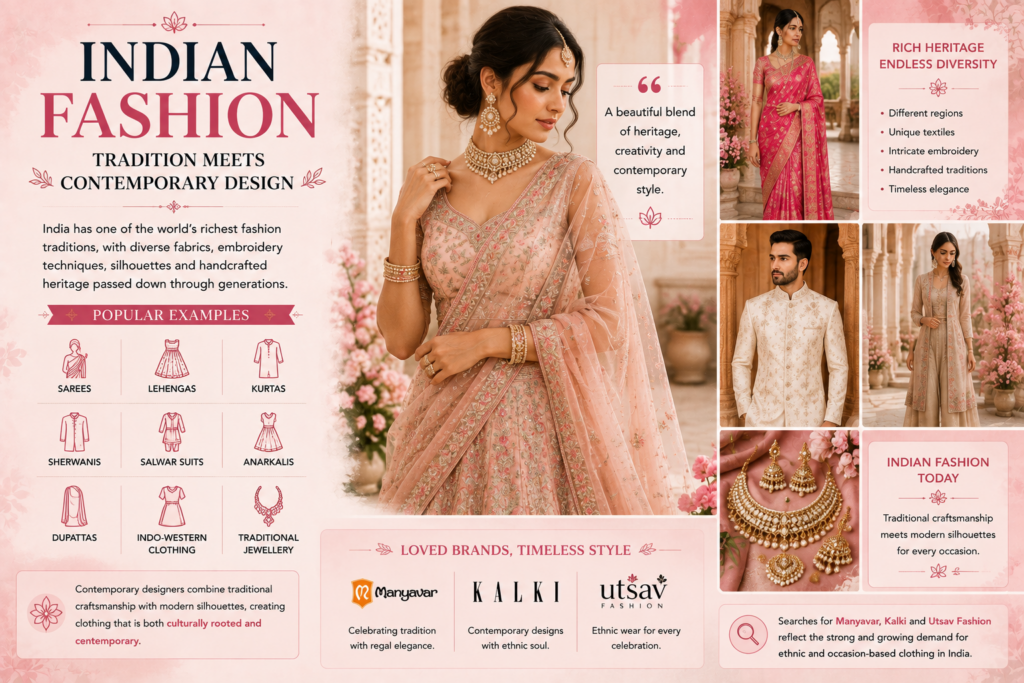
Contemporary designers increasingly combine traditional craftsmanship with modern silhouettes.
This creates clothing that can feel both culturally rooted and contemporary.
Names and searches associated with Indian fashion include Manyavar, Kalki and Utsav Fashion, reflecting the strong demand for ethnic and occasion-based clothing.
Utsav Fashion and Ethnic Wear
Utsav Fashion is associated with the growing online discovery of Indian ethnic clothing.
Online shopping has made traditional clothing accessible to customers who may not have specialist ethnic fashion stores nearby.
Consumers can explore outfits for weddings, festivals, celebrations and other occasions without being restricted by their local selection.
The online availability of ethnic fashion has also helped expose regional styles to a much wider audience.
Fashion Stores and the Shopping Experience
A fashion store is no longer necessarily a physical shop.
Consumers now discover and purchase fashion through boutiques, department stores, brand websites, mobile applications and online marketplaces.
Physical stores still offer important advantages. Customers can touch fabrics, assess colours, try clothing and immediately understand how garments fit.
Online fashion stores, on the other hand, offer convenience and variety.
People can compare products, read reviews, explore different sizes and styles and shop from home.
This combination of physical and digital shopping has created a more flexible fashion experience.
Nykaa Fashion and Digital Fashion Shopping
Nykaa Fashion represents the growing connection between fashion and digital commerce.
Online fashion platforms allow consumers to browse a wide range of clothing, accessories and lifestyle products from one location.
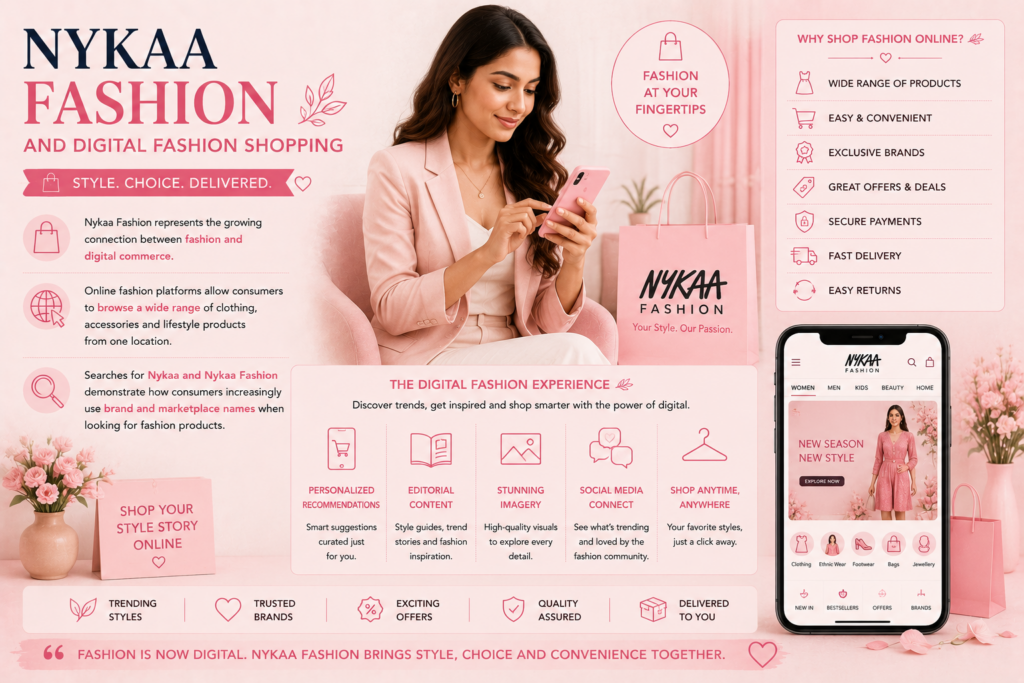
Searches for Nykaa and Nykaa Fashion demonstrate how consumers increasingly use brand and marketplace names when looking for fashion products.
The digital fashion experience also allows shoppers to discover trends through product recommendations, editorial content, imagery and social media.
Myntra Fashion and Everyday Shopping
Myntra Fashion is another example of how digital platforms have changed the way people discover clothing.
Online fashion shopping makes it possible to explore categories including:
– Women’s fashion
– Men’s fashion
– Kids fashion
– Footwear
– Accessories
– Sportswear
– Ethnic wear
– Casual clothing
– Formal clothing
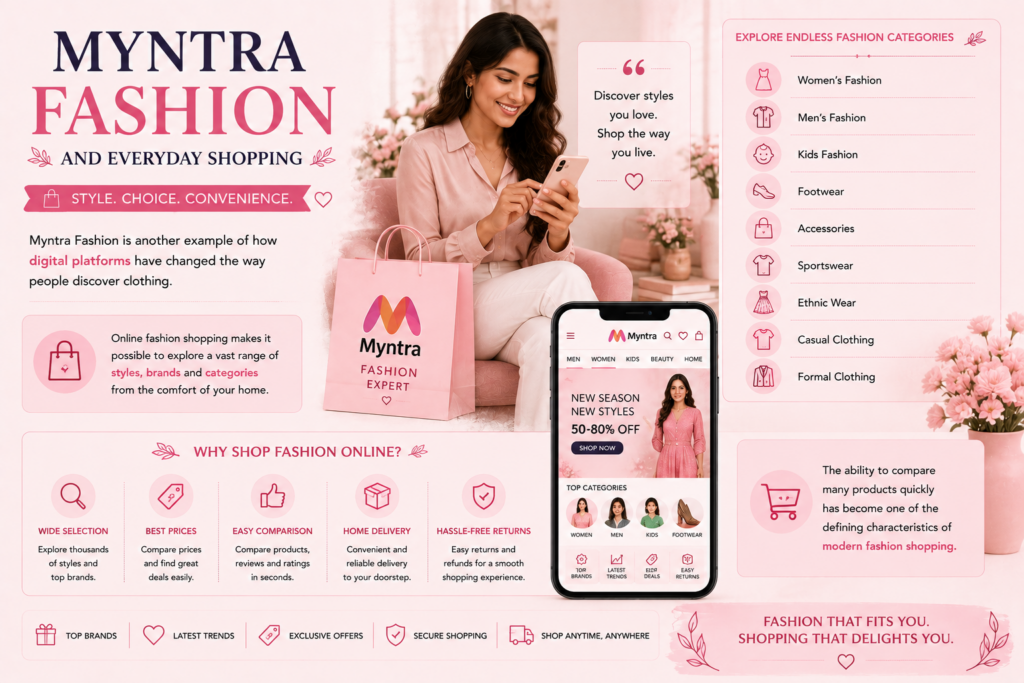
The ability to compare many products quickly has become one of the defining characteristics of modern fashion shopping.
Max Fashion and Accessible Everyday Style
Max Fashion is associated with accessible everyday clothing for a broad range of consumers.
Everyday fashion is often about balancing style, comfort and practicality.
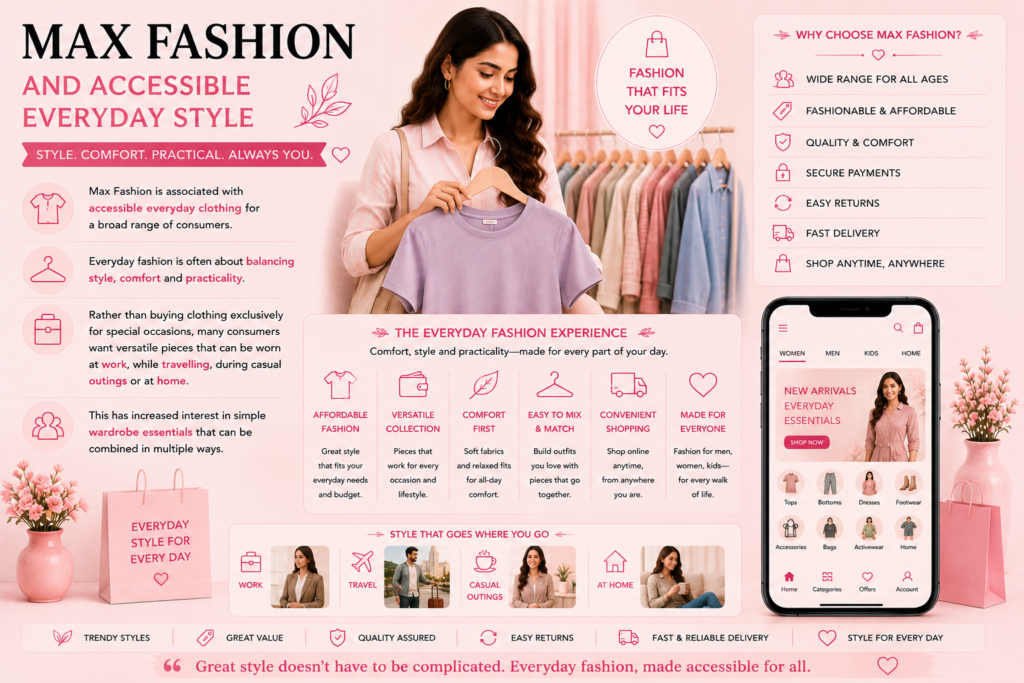
Rather than buying clothing exclusively for special occasions, many consumers want versatile pieces that can be worn at work, while travelling, during casual outings or at home.
This has increased interest in simple wardrobe essentials that can be combined in multiple ways.
Urbano Fashion and Contemporary Wardrobes
Urbano Fashion is another name appearing in fashion-related searches.
Contemporary fashion brands often build their identity around a particular lifestyle or aesthetic. Some focus on streetwear, some on minimalism, some on youthful clothing and others on formal or occasion wear.
This variety allows consumers to choose brands that match their individual identity rather than simply buying whatever happens to be fashionable.
Fashion Factory and Local Fashion Businesses
The phrase fashion factory can refer to different types of fashion businesses, from clothing manufacturers to retail and production establishments.
Local searches such as fashion factory Thrissur demonstrate how people use location alongside fashion-related terms when looking for businesses.
Local fashion businesses can include:
– Clothing manufacturers
– Boutiques
– Fashion retailers
– Tailors
– Designers
– Textile suppliers
– Fashion studios
– Jewellery businesses
Local fashion is especially important in India because regional textile traditions and manufacturing communities contribute significantly to the wider industry.
Fashion Studio: From Idea to Finished Garment
A fashion studio can be the creative heart of an independent fashion business.
Designers may use studios for sketching, pattern development, fabric experimentation, fittings, photography and client consultations.
For custom fashion, a studio can also provide a more personal experience.
Customers may work directly with designers to select fabrics, modify silhouettes and develop garments specifically for an event or individual style.
The Relationship Between Fashion and Culture
Fashion and culture are closely connected.
Traditional clothing can preserve history and identity, while contemporary fashion can reinterpret those traditions for new generations.
Indian designers frequently draw inspiration from:
– Regional textiles
– Traditional embroidery
– Architecture
– Festivals
– Art
– Historical clothing
– Local craftsmanship
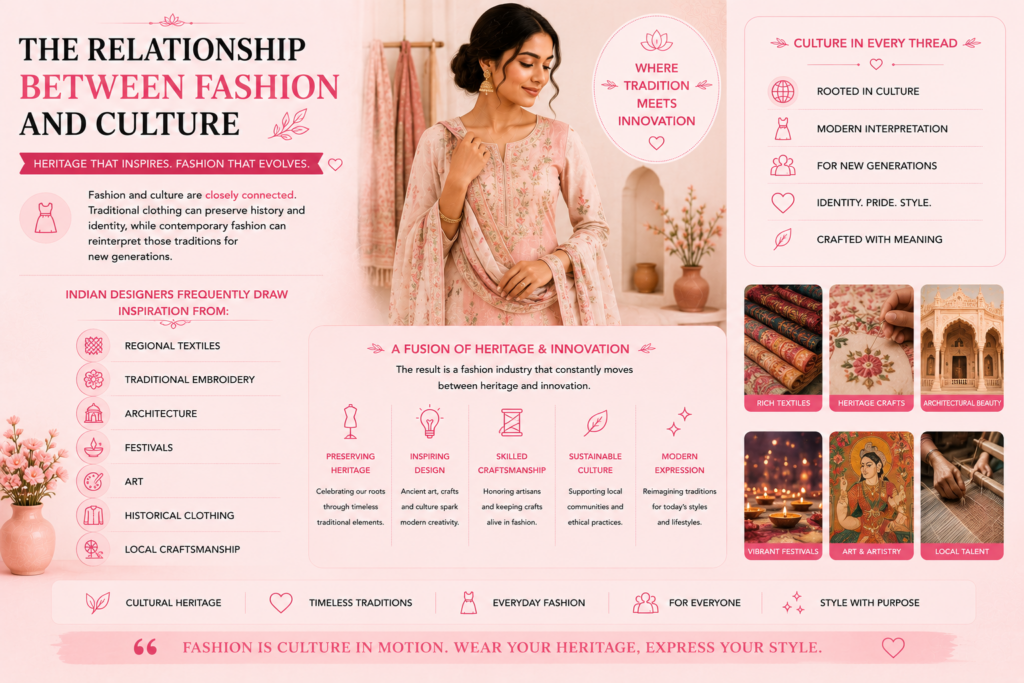
The result is a fashion industry that constantly moves between heritage and innovation.
Why Fashion Continues to Change
Fashion changes because society changes.
Technology influences manufacturing and shopping. Social media accelerates trends. Designers experiment with new materials and silhouettes. Consumers become more conscious about sustainability. Cultural influences travel across borders faster than ever.
A trend can begin in one city and become popular internationally within days.
At the same time, older trends can return in new forms.
This cycle of innovation, revival and reinterpretation is one of the defining characteristics of fashion.
The Future of Fashion
The future of fashion will likely be shaped by creativity, technology, sustainability and changing consumer expectations.
Designers will continue experimenting with materials, silhouettes and production methods. Consumers will have access to an increasingly wide range of global and local brands. Digital shopping will continue to evolve, while physical stores will remain important for customers who value personal experiences.
Sustainable fashion is also likely to remain an important part of the conversation as consumers become more interested in durability, responsible production and the life cycle of clothing.
Ultimately, fashion is not simply about wearing what is popular.
It is about creativity, identity and expression.
Whether someone is interested in becoming a fashion designer, studying fashion designing, exploring fashion design, buying fashion jewellery, discovering new fashion, building a men fashion wardrobe, shopping for kids fashion, exploring Indian ethnic wear or choosing more sustainable clothing, fashion offers countless ways to express individuality.
The most exciting part of fashion is that there is no single definition of style. Trends will change, designers will innovate, and new ideas will emerge—but the freedom to create a personal style will always remain at the heart of fashion.
Image credit: All the images are made using ChatGPT.
Recommend0 recommendationsPublished in apparel, Bridal, celebrity fashion, Hairstyles, Health, Jewelry, Makeup, Our Fashion Passion, Petite, Plus Size, Pop Fashion, Shoes, Skin Care, street style, Uncategorized