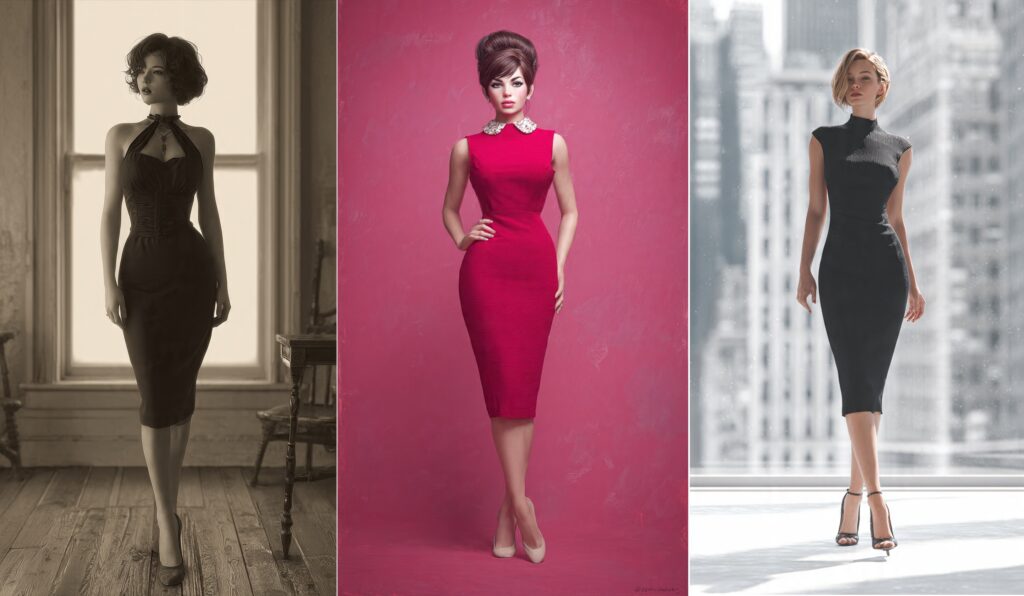
Few garments have achieved the enduring status and universal appeal of pencil dresses. Sleek, form-fitting, and effortlessly sophisticated, the pencil dress has remained a staple in women’s fashion for over a century. Its story is deeply intertwined with cultural shifts, evolving ideals of femininity, and the influence of some of the most iconic designers in fashion history.
Early Origins: The Birth of a Silhouette
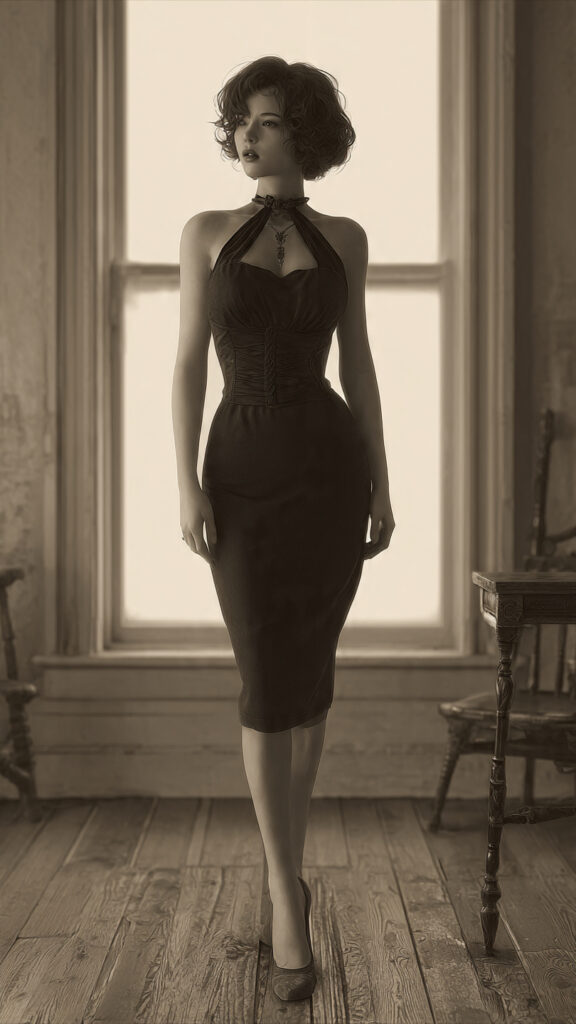
The origins of the pencil dress can be traced back to the early 1900s, particularly the 1910s, when fashion began to shift away from the restrictive, heavily layered garments of the Victorian era. One of the earliest influences was the “hobble skirt,” popularized by designers like Paul Poiret. These skirts were narrow at the hem, restricting movement but introducing a long, lean silhouette that would later inspire the pencil dress.
Although not yet practical or widely embraced, the hobble skirt marked a turning point. Women’s fashion was beginning to prioritize shape and line over volume, setting the stage for more streamlined designs.
The 1940s–1950s: The Pencil Dress Comes Into Its Own
The pencil dress as we know it truly emerged in the 1940s and flourished in the 1950s. During this period, fabric rationing in World War II encouraged simpler, more tailored designs. After the war, fashion embraced femininity again, and the silhouette became more refined and body-conscious.
The iconic “New Look,” introduced by Christian Dior in 1947, emphasized a cinched waist and elegant lines. While Dior is often associated with full skirts, his structured, narrow dresses also helped popularize the pencil silhouette.
Hollywood played a major role in cementing the pencil dress as a symbol of glamour. Stars like Marilyn Monroe frequently wore form-fitting dresses that highlighted their curves, making the style synonymous with confidence and allure.
The 1960s–1970s: Modernization and Versatility
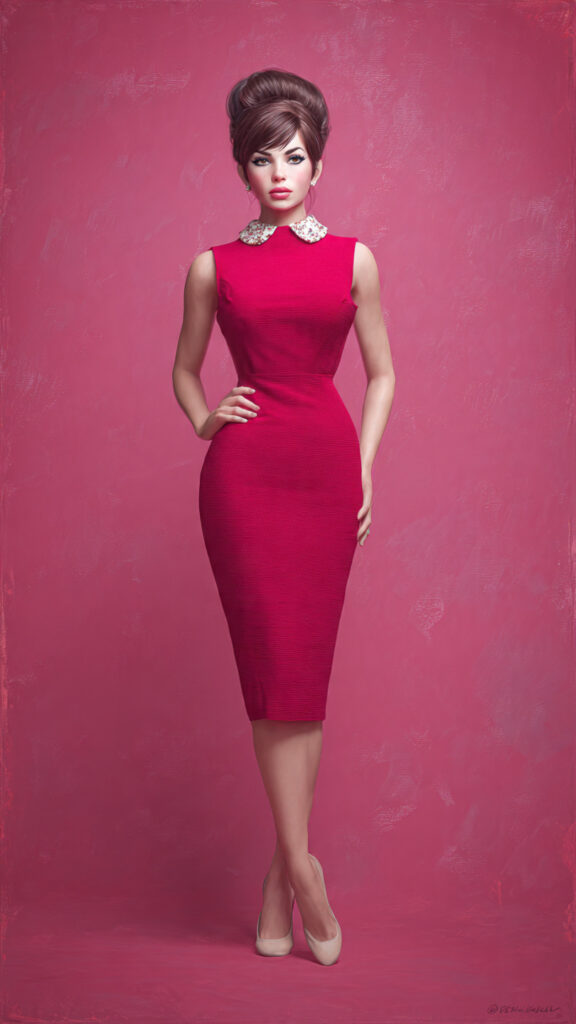
As the cultural landscape shifted in the 1960s, so did fashion. The pencil dress adapted to the modern era, becoming more versatile and accessible. Designers embraced cleaner lines, lighter fabrics, and shorter hemlines.
One of the most iconic examples of the pencil dress in this era is worn by Audrey Hepburn in Breakfast at Tiffany’s. The simple black sheath dress became a timeless symbol of understated elegance.
During the 1970s, the rise of women in the workforce further boosted the popularity of the pencil dress. It transitioned seamlessly into professional settings, offering a polished and authoritative look without sacrificing femininity.
The 1980s–1990s: Power Dressing and Minimalism
The 1980s introduced the concept of “power dressing,” where clothing reflected ambition and authority. Pencil dresses became a key component of this trend, often featuring bold shoulders, structured tailoring, and strong lines. They were worn by women breaking barriers in corporate environments, symbolizing both professionalism and empowerment.
In contrast, the 1990s brought a return to minimalism. Designers like Calvin Klein embraced simplicity, favoring clean silhouettes and neutral tones. The pencil dress during this time was stripped down to its essence—sleek, refined, and effortlessly chic.
The 2000s to Today: Reinvention and Inclusivity
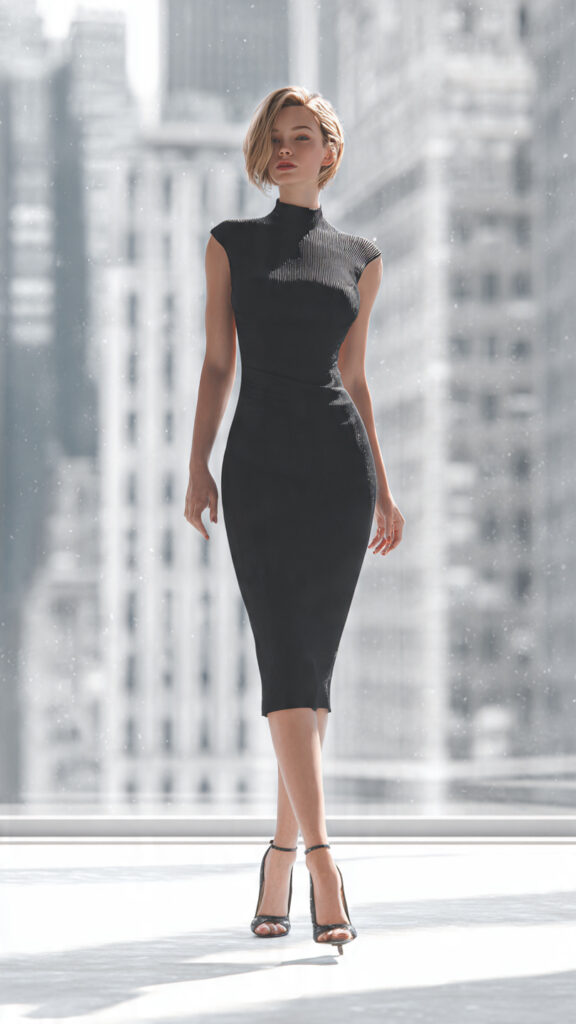
In the 21st century, the pencil dress has continued to evolve while maintaining its core identity. Designers experiment with fabrics, textures, and cuts, from stretch materials to asymmetrical designs. The rise of body positivity has also redefined how the pencil dress is perceived and worn, celebrating a wide range of body types.
Celebrities, influencers, and professionals alike continue to embrace the pencil dress for its versatility. Whether worn in the office, at formal events, or on the red carpet, it remains a go-to choice for those seeking a balance between elegance and modern style.
Why the Pencil Dress Endures
The lasting appeal of the pencil dress lies in its simplicity and adaptability. It can be dressed up or down, styled for different occasions, and tailored to suit individual preferences. More importantly, it has consistently reflected the changing roles and identities of women throughout history.
From its restrictive beginnings in the early 20th century to its current status as a symbol of empowerment and sophistication, the pencil dress is more than just a piece of clothing—it is a testament to the evolution of fashion and the women who wear it.
As trends come and go, the pencil dress remains a constant, proving that true style is, indeed, timeless.
Recommend0 recommendationsPublished in Uncategorized